When Zulu Ali left the United States Marine Corps and later a career in law enforcement, few would have predicted that his path would lead to the International Criminal Court at The Hague, yet that trajectory, built over decades of deliberate professional choices, is precisely what distinguishes him from nearly every other practicing attorney in the country.
Ali’s legal career did not emerge from inherited advantage or institutional convenience. It grew from a specific observation: that non-citizens facing both criminal prosecution and immigration consequences were being served by a legal system that treated those two realities as separate problems. That gap, which most attorneys either overlooked or accepted as fixed, became the organizing principle of his practice. His firm, Zulu Ali and Associates, LLP, developed an integrated model of defense, often referred to in legal and academic circles as “crimmigration” defense, in which criminal case outcomes are assessed for their direct impact on a client’s immigration status. The model has since been featured in Forbes Scotland, the Daily Journal, and Essence Magazine, each of which recognized the firm as a substantive response to a structural problem in legal representation.
His background before law school shaped the practice in ways that formal legal training alone could not. Ali served in the Marine Corps and spent more than a decade as a police officer, which gave him an operational understanding of law enforcement procedures and prosecutorial strategy that informs his defense work in concrete, practical terms. That experience is not incidental to his reputation. It is foundational to it.
A Practice Built on a Structural Gap
Zulu Ali and Associates has grown to become the largest Black-owned law firm in California’s Inland Empire, a milestone that reflects sustained institutional trust and measurable client demand for the model Ali built. The firm’s reach extends well beyond state or federal court. Ali is admitted to practice before the International Criminal Court at The Hague and the African Court of Justice, credentials that are uncommon among American attorneys and that allow the firm to engage in cross-border legal matters with a depth that most domestic practices are not equipped to offer.
That research has produced documented outcomes with national implications. Ali secured a published victory in the United States Federal Court of Appeals that established a new legal standard for claims under the United Nations Convention Against Torture. Published appellate decisions of that nature are rare; those that establish new standards are rarer still. The precedent reflects not only the quality of his legal argument but also the scope of issues his practice is positioned to address.
Recognition of his work has come from a range of independent institutions. Ali and his daughter, Attorney Whitney Ali, were named among the Most Influential People of African Descent in Law and Justice, an initiative supported by the United Nations. The firm has also received recognition from The National Trial Lawyers Top 100 and the American Institute of Trial Lawyers, both of which base their evaluations on documented trial performance and professional conduct. These assessments, drawn from different organizations across multiple disciplines, form a consistent record rather than a single endorsement.
Leadership That Extends Beyond the Courtroom
Ali founded the Linda Reese Harvey Stop and Frisk Leadership Academy, a program that educates young people on constitutional rights and how to navigate interactions with law enforcement. He also operates the Southern California Veterans Legal Clinic, which provides low-cost and pro bono legal services to veterans and active-duty military personnel. Neither program generates commercial return. Both reflect a set of professional values that Ali has applied consistently across his career, in the courtroom, in the community, and in the institutions he has chosen to engage.
The decision to invest resources into populations that offer no financial incentive is one of the clearer indicators of what has sustained his career over time. Legal excellence, when decoupled from a principled sense of purpose, tends to narrow over the course of a career. Ali’s work has done the opposite. It has broadened, reaching further into underserved communities and further into international legal arenas simultaneously.
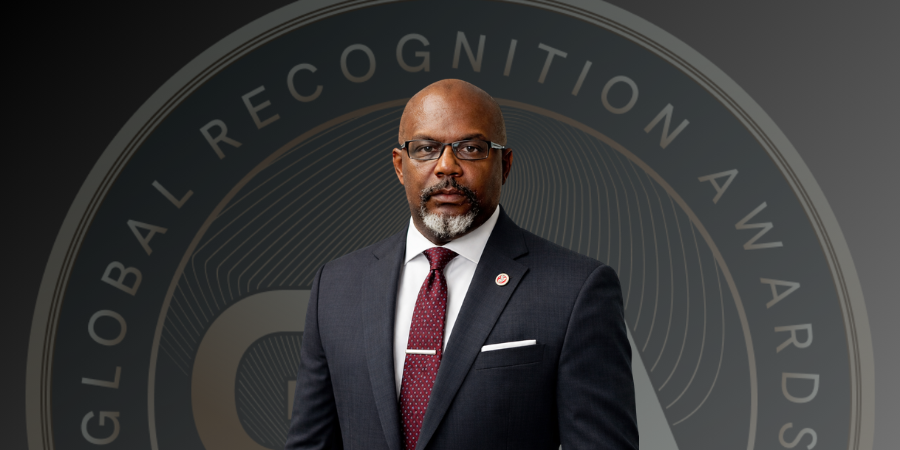
Ali received a 2026 Global Recognition Award for his contributions across innovation, leadership, and service. The program evaluates nominees using the Rasch model, a structured measurement framework that allows for comparative assessment across applicants excelling in different categories. His portfolio was assessed at a score of 5, which the program defines as exceptional, following a panel of independent industry experts’ review. Global Recognition Awards spokesperson Alex Sterling said, “Zulu Ali exemplifies exactly the kind of world-class achievement this award exists to honor: a legal career defined by innovation, principled leadership, and a genuine commitment to communities that need it most.”
A Career Defined by Consistency
What makes Ali’s career difficult to replicate is not any single achievement but the sustained coherence between his values and his work. The integration of criminal defense, immigration law, and international human rights advocacy into a single, functioning practice required not only legal skill but a long-term commitment to a professional model that the legal industry had not yet validated when he began building it.
His admissions to international courts, his appellate precedent, his community programs, and his recognition by United Nations-affiliated organizations are not parallel accomplishments. They are connected expressions of the same professional vision, developed steadily over decades of practice in communities that had reason to be skeptical of the legal system he now works to reform from within.
In a legal profession that often rewards specialization and discourages the kind of institutional risk-taking that Ali’s career represents, his record stands as evidence that principled innovation, applied consistently across borders and disciplines, leaves a mark that neither a single verdict nor a single award can fully contain.