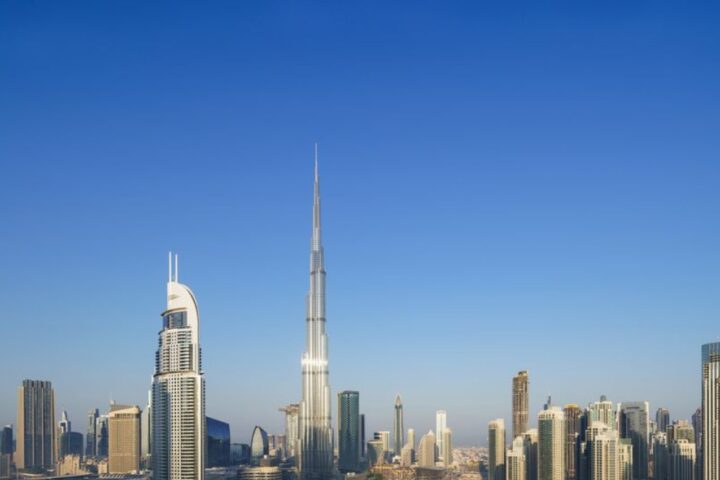

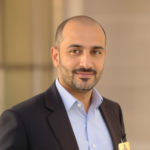
When Ahmad Sabra completed dual degrees in architecture and civil engineering, he was making a bet that most of his peers were not willing to place, that the two disciplines, typically kept at arm’s length in professional practice, would prove more powerful when held together. More than two decades later, that bet has paid off in ways that are visible across the Gulf skyline.
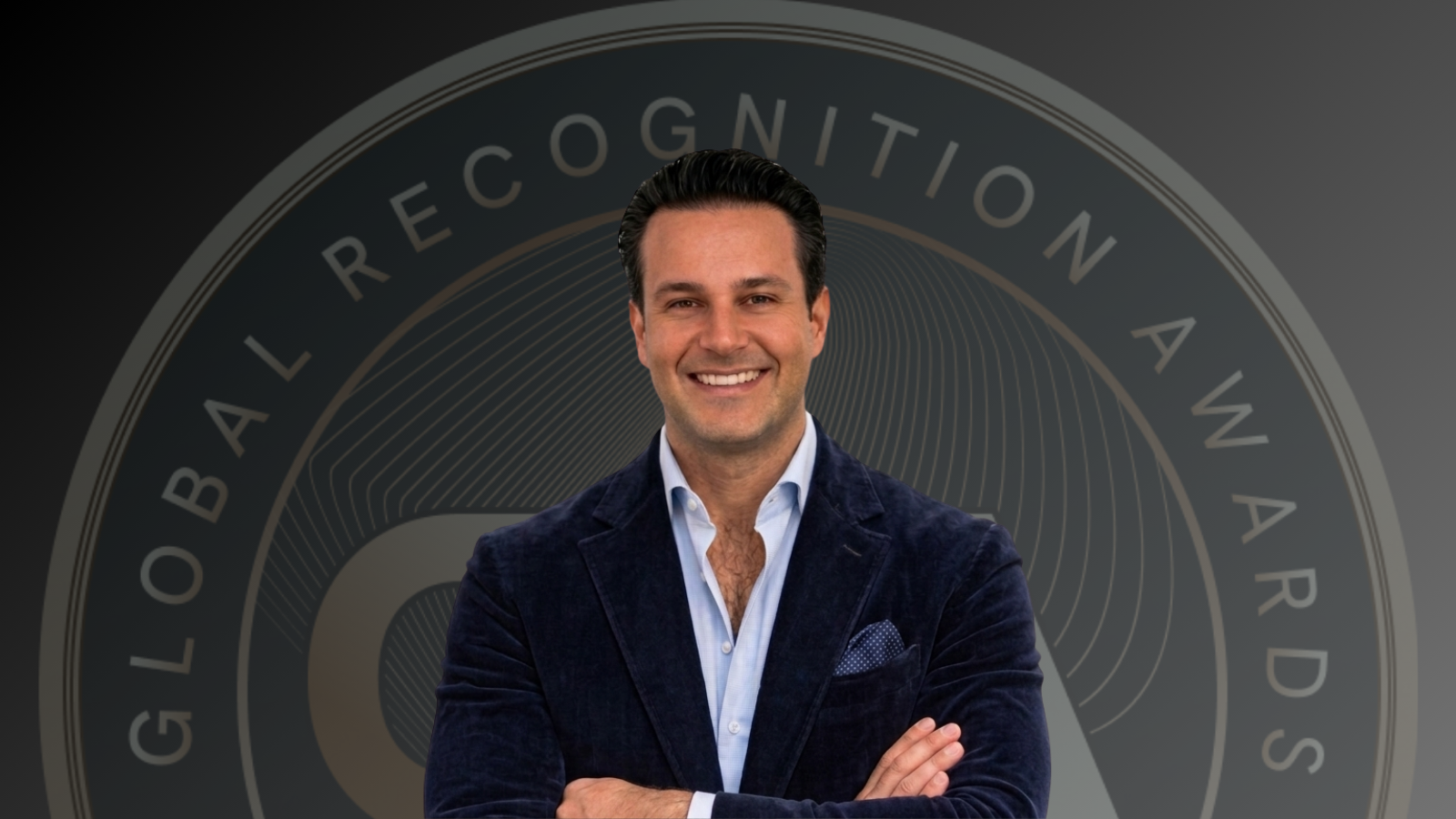
Sabra has been recognized with a 2026 Global Recognition Award for his contributions to sustainable architecture and urban design, and for his capacity to lead complex, multidisciplinary development projects across the Gulf region. The award evaluates nominees using the Rasch model, a psychometric measurement tool that creates a linear scale for comparing candidates across different areas of excellence. It placed him at the highest level across vision and strategy implementation, leadership, innovation, and intellectual property. What made his case notable was not a single standout category but consistent strength across all of them.
After earning his Master of Urban Planning, Sabra spent more than 12 years as Project Director at HLG/BICC, where the focus was less on concept and more on execution: delivering large-scale builds on time and within budget, meeting precise design standards. It was the kind of role that builds professional credibility quietly, through repeated performance rather than public recognition. That period shaped the practitioner he would become, someone with the technical fluency to move between a design meeting and a construction site without losing the thread of either.
Architecture Shaped by Place
Since March 2014, Sabra has served as Head of Group Projects at RTS Investments Group, overseeing construction and development initiatives across Dubai and the wider Gulf, and as General Manager of DAR Al Rokham. He founded Le Sabrarchitecture as a platform for an integrated design philosophy, one that treats sustainability not as a feature to be added late in the process, but as a structural requirement embedded from the earliest design stages. His conceptual tower designs aim to reshape Gulf skylines while maintaining a connection to local identity. This balance has proven difficult for many regional developers working with imported architectural languages.
His approach is grounded in the specific climatic, cultural, and economic conditions of the Middle East. Where some practitioners treat sustainability as a compliance requirement, Sabra integrates it as a design premise, allowing cultural context and environmental performance to inform each other rather than compete. This method gives his work a coherence that persists from concept through construction, reducing the compromises that often erode a project’s original intent as it moves through engineering and contracting phases.
The results are evident in how he speaks about the relationship between architectural ambition and environmental responsibility. “A building can respond to its climate, honor its cultural context, and still function as a landmark that contributes to a city’s identity,” Sabra has said. It is a position that sounds straightforward, but executing it across a portfolio of projects at the scale he manages requires technical discipline and a sustained commitment to the underlying philosophy.
Leading Across Disciplines
Sabra also serves as Chairman of the Sustainable Cities Committee of the Arab League Partners Alliance and as a Board Member of the Lebanese Business Council Dubai. These roles extend his influence beyond individual projects into the policy and planning conversations shaping the region’s urban future. They also reflect a consistent pattern in his career: a progression of expanded responsibility that has followed performance rather than preceded it.
His leadership approach is built around integration, bringing architects, engineers, and planners into alignment at the earliest stages of a project rather than managing them as separate functions. This reduces costly late-stage revisions and keeps the final structure closer to the original design intent. Colleagues at HLG/BICC and RTS Investments Group have consistently endorsed his capabilities across project management, contract negotiation, team leadership, and construction management, a range of validations that speak to direct collaboration rather than title or seniority alone.
Leading teams that cover architecture, engineering, contracts, and construction management demands technical authority and the interpersonal skill to keep those disciplines working toward a shared outcome. Sabra has applied this method across private developments, urban planning initiatives, and group property management, demonstrating its adaptability across project types that vary significantly in scale and complexity.
A Record Built on Depth
Alex Sterling, a spokesperson for Global Recognition Awards, noted that Sabra’s “ability to unify creative vision, technical engineering, and sustainable leadership into a coherent and impactful body of work places him among the most compelling architectural voices working in the Gulf today.” The comment points to what is perhaps the clearest through-line in his career: not the accumulation of roles, but the integration of competencies across all of them.
What distinguishes Sabra’s career is not breadth alone. It is the degree to which each discipline informs the others. Architecture, civil engineering, urban planning, sustainability, and executive leadership are not parallel tracks in his practice; they are interdependent. That integration, difficult to build and easy to underestimate, is what gives his body of work its coherence and its staying power.
For cities still deciding what they want to look like in the decades ahead, the architectural practice Ahmad Sabra has built offers one clear answer: that the built environment, when designed with technical rigor and cultural awareness, can do more than house activity. It can shape how a place understands itself.