
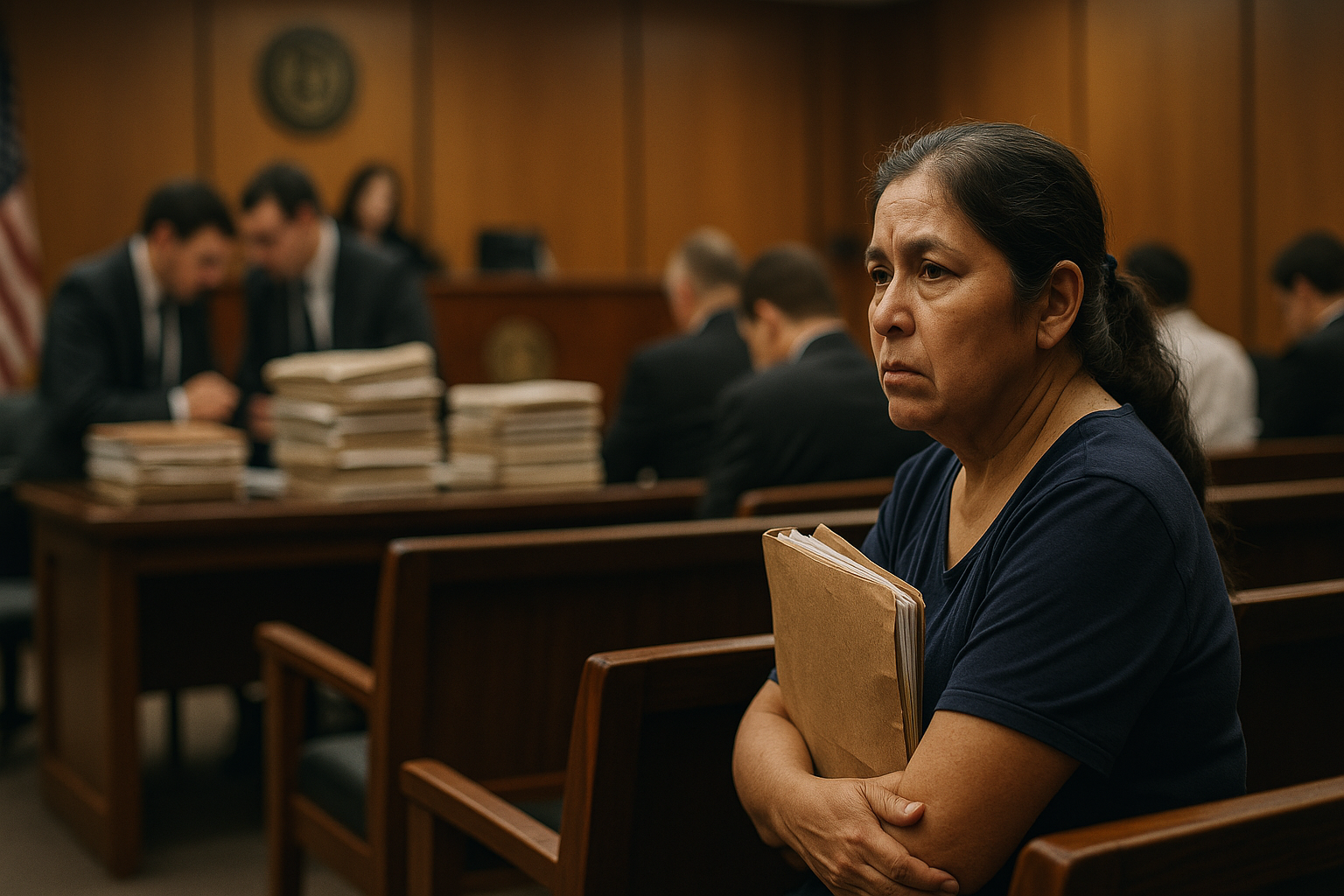

The hearing was scheduled for 10 a.m., but by noon, the judge was still wading through the morning’s cases. A mother in her forties, undocumented for nearly two decades, sat in a windowless immigration courtroom holding a folder of neatly stacked papers. She had waited seven years for this day, only to be told the case would be continued for another year due to the court’s backlog. For Hillary Walsh, an immigration attorney who has argued before the U.S. Supreme Court, moments like this are not outliers – they are the product of a system that has not seen substantive legislative reform in nearly four decades.
The question of why the United States, a country shaped by immigration, has failed to enact major reform is not one with a simple answer. It is shaped by political calculus, bureaucratic inertia, and competing visions of what immigration should look like in the 21st century. And it is a question that resonates in every courtroom, detention center, and congressional hearing where the lives of immigrants are debated but rarely resolved.
Legislative Gridlock And Political Cost
The last comprehensive immigration reform was signed into law in 1986 under President Ronald Reagan, granting legal status to nearly three million undocumented immigrants. Since then, multiple attempts, most notably in 2006 and 2013, have failed to pass both chambers of Congress. The political costs of compromise have become prohibitive, with immigration used as both a rallying cry and a wedge issue in election cycles.
Hillary Walsh of New Frontier Immigration Law argues that part of the reason reform stalls is that the issue serves political purposes on both sides. “Some in Washington treat immigration not as a problem to solve, but as a problem to campaign on,” she said. The result is legislative theater without the follow-through, where each failed attempt reinforces public cynicism.
This gridlock persists despite bipartisan acknowledgment of system strain. Employers in industries ranging from agriculture to tech call for more visas; human rights advocates push for expanded asylum protections; and law enforcement agencies request clearer enforcement priorities. Yet the ideological divide over border security and pathways to legal status remains as deep as it was decades ago.
Backlogs And Bureaucracy As De Facto Policy
Immigration reform is not only a legislative issue, it is also a structural one. As of mid-2025, more than 3.5 million cases are pending in U.S. immigration courts. The Executive Office for Immigration Review has hired over 600 judges, but the pace of case completions is not keeping up with new filings. In June 2025, only about 21.6% of people who received removal orders had legal representation at the time of their final order.
These delays can have the same effect as policy decisions. “Every month a case sits untouched, someone’s life is in limbo, and that limbo becomes the policy,” Walsh said. Extended wait times can mean years of uncertainty, during which individuals cannot work legally, travel, or access certain benefits. For those seeking asylum, prolonged delays can also mean difficulty presenting evidence or securing witnesses as time passes.
USCIS, the agency handling applications for benefits like green cards and citizenship, also faces backlogs. In FY2024, it approved approximately 818,500 naturalization applications, but processing times for certain petitions can still stretch beyond two years. For some categories, such as family reunification visas, waits of over a decade are not uncommon.
Economic, Social, And Demographic Pressures To 2030
Immigration policy is not only about border enforcement—it is central to the country’s economic future. The U.S. faces labor shortages in healthcare, construction, agriculture, and eldercare. By 2030, the working-age population is expected to grow at its slowest rate in decades, putting pressure on industries that rely on immigrant labor.
The immigration legal market itself is projected to grow steadily, valued at approximately $9.9 billion in 2025. Technological integration, including digitized court hearings and online filings, will reshape how cases are processed. Policy shifts, such as changes to H-1B selection criteria or seasonal worker visa caps, will continue to generate new legal challenges and opportunities for reform.
Walsh envisions reform not just as a matter of efficiency but of perception. “Bryan Stevenson changed how America talks about death row. I want to do the same for undocumented immigrants,” she said. This framing focuses on shifting public narratives – emphasizing resilience, contributions, and humanity rather than solely legal status.
The United States has the legislative tools to overhaul its immigration system, yet year after year, those tools remain unused. The result is a policy landscape shaped by inaction as much as by action, where backlogs, partial measures, and piecemeal rules dictate the lives of millions.
Hillary Walsh has spent her career navigating these gaps, representing clients who live between the promise of legal protection and the reality of bureaucratic delay. Her critique is less about partisan blame and more about the cost of waiting – on families, on the economy, and on the nation’s credibility.
Will the U.S. continue to treat immigration reform as a political talking point rather than a legislative priority? Or will it confront the human and economic stakes with the urgency they deserve? The answer will shape not only the future of immigrants but the future of the country itself.