

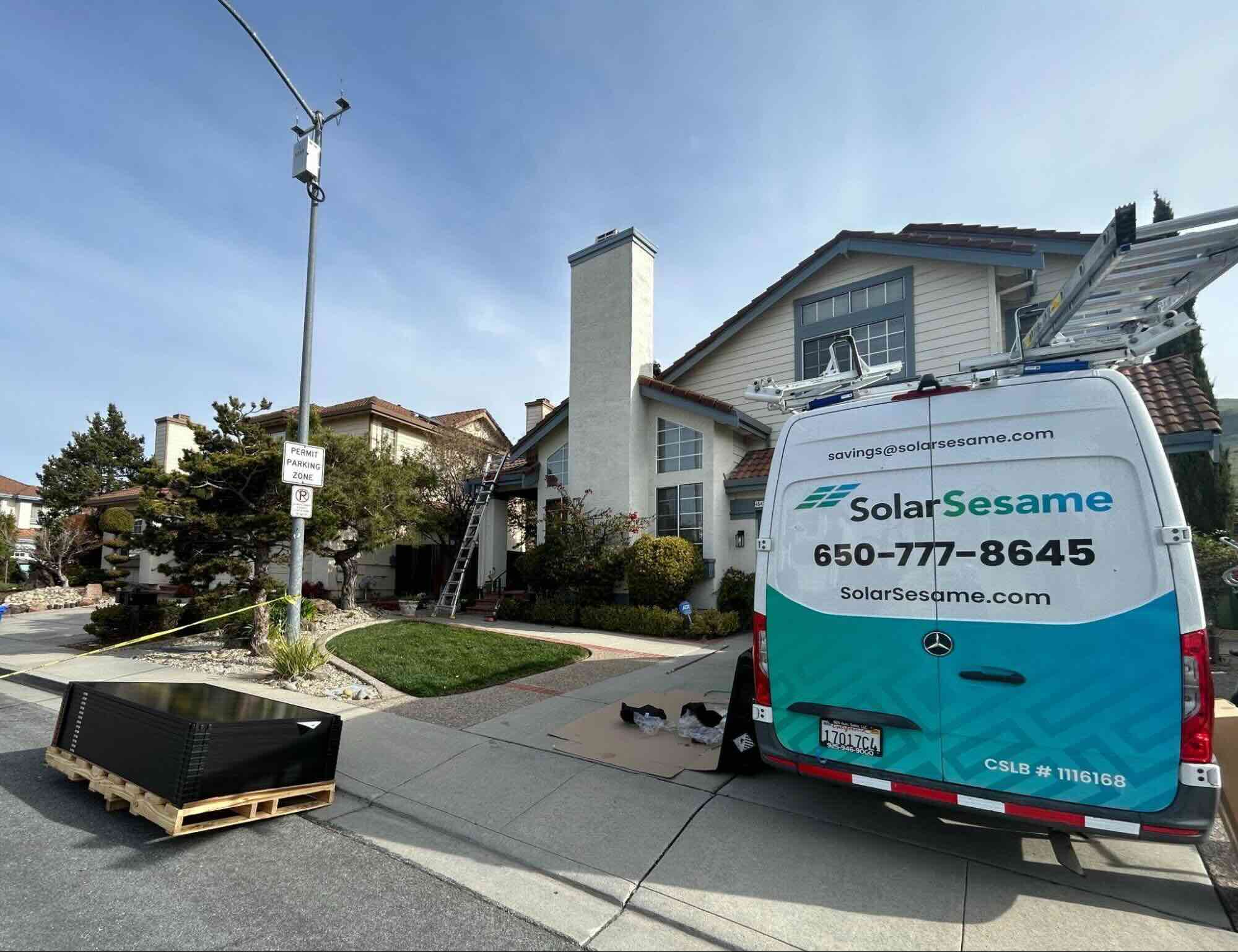

As electricity prices remain a persistent concern in California, more homeowners are reassessing whether solar still makes financial sense. For some, the question is no longer whether to install a system, but which financing structure offers the clearest path to savings. That shift has created more interest in alternatives to the standard cash purchase, loan, or long-term power purchase agreement.
One company drawing attention in that conversation is Solar Sesame, a Northern California-based solar provider that offers a prepaid power purchase agreement, or prepaid PPA. The company presents the model as a way for homeowners to lower their initial out-of-pocket cost, avoid monthly solar payments during the early years, and ultimately receive ownership of the system after a defined term.
A Financing Model Built Around an Early Discount
Unlike a traditional power purchase agreement, in which a third party typically owns the system for the life of a long contract and the homeowner pays for the electricity it produces over time, a prepaid PPA uses a different structure. In Solar Sesame’s version, the homeowner makes a one-time upfront payment, while a financing partner owns the system during the initial period.
According to the company, that initial ownership period generally lasts about five years. During that time, the financing entity, rather than the homeowner, is positioned to receive available federal tax-related benefits tied to the system’s ownership, and Solar Sesame says that value is reflected in the homeowner’s lower upfront price. After the initial term ends, the company says ownership transfers to the homeowner at no additional cost, subject to the terms of the agreement.
Solar Sesame says this arrangement can reduce the effective upfront cost by roughly 30% compared with a standard cash purchase. The company also says the discount may be higher in certain cases, including projects that qualify for additional incentives connected to federally designated energy communities. As with any solar financing structure, the exact economics depend on project size, equipment, location, applicable incentive rules, and the contract itself.
Why the Structure May Resonate in California
The timing of this model is notable. California homeowners are navigating a market shaped by high utility rates, continued interest in backup power, and policy changes that have made exported solar energy less valuable than it once was for many households. In that environment, systems designed around on-site consumption and battery storage have become more central to the residential solar conversation.
Solar Sesame pairs its prepaid PPA offering with equipment such as Tesla Powerwall battery systems and Enphase microinverter-based systems. The company says those configurations can strengthen the value of the prepaid model by helping homeowners use more of their own generated electricity instead of depending as heavily on the grid.
The appeal, at least on paper, is straightforward. A homeowner pays a reduced amount upfront, does not make ongoing monthly solar payments during the initial ownership period, and then may take ownership after roughly five to six years. Solar Sesame uses examples showing that a system priced at $30,000 under a standard cash purchase could cost closer to $20,000 upfront under a prepaid PPA structure, though actual pricing will vary by installation.
Ownership, Timing, and the Importance of Contract Terms
For homeowners comparing solar options, the ownership timeline may be the most important distinction. Traditional PPAs often prioritize lower entry costs but leave the system under third-party ownership for decades. A prepaid PPA, by contrast, is designed to shorten that period while still allowing the financing partner to structure the deal around available tax benefits.
That said, prepaid PPAs remain more specialized than direct purchases or standard solar loans, which means details matter. The way savings are calculated, who is responsible for maintenance and monitoring during the initial term, how the transfer of ownership is documented, and what happens if the home is sold before the transfer date can all materially affect the homeowner’s experience.
Solar Sesame says its model includes monitoring and maintenance while the financing partner owns the system and is built specifically around the transition to ownership after about five to six years. For homeowners who want a lower upfront price without committing to long-term monthly solar payments, that structure may stand out as California’s residential energy market continues to evolve.