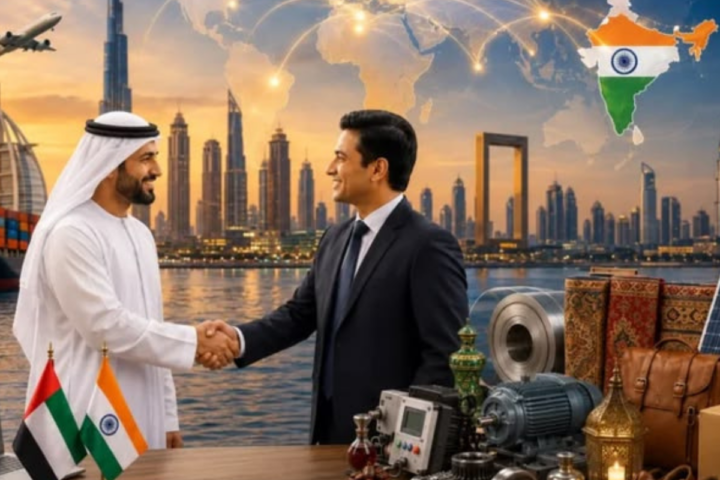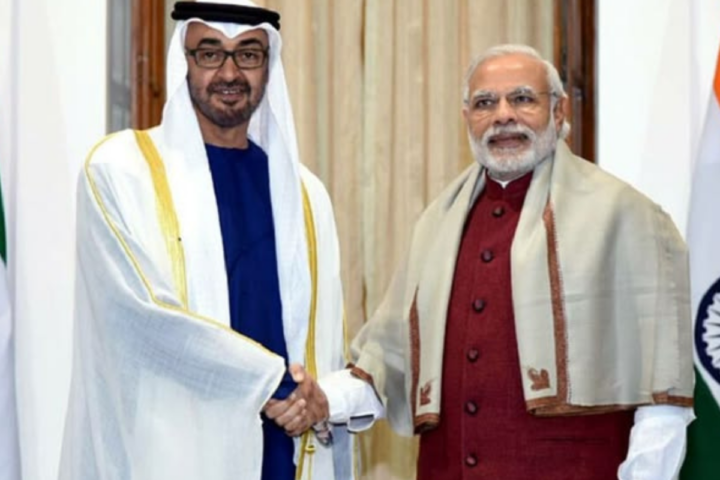


As India marks its 80th year of independence, the view from the UAE is not simply one of celebration. It is a recognition that India has become central to the economic map of the region, combining the scale of a vast consumer market with a growing reputation for technology, entrepreneurship and industrial ambition.
For Emirati business leaders, investors and trade executives, India is no longer viewed only as a historic commercial partner across the Arabian Sea. It is increasingly seen as a long-term growth market and a strategic collaborator in building resilient supply chains, digital infrastructure, clean-energy platforms and investment networks. The relationship’s momentum is measurable: bilateral trade reached about US$100 billion in FY 2024–25, while leaders from both countries have set a new target of US$200 billion by 2032.
A Relationship Built Beyond Commerce
The India-UAE connection has always carried a human dimension. Families, merchants, professionals and entrepreneurs have travelled between the two countries for generations, creating cultural familiarity that few bilateral partnerships can replicate. Dubai and Abu Dhabi have become second homes for a large Indian diaspora, while the UAE has grown into a natural gateway for Indian companies seeking access to the Middle East, Africa and global markets.
That foundation of trust has given commercial ties unusual depth. The two nations elevated their engagement to a Comprehensive Strategic Partnership in 2017, broadening the conversation beyond conventional trade. Today, cooperation reaches into infrastructure, logistics, food security, renewable energy, financial services, technology and advanced manufacturing.
For business leaders, this matters because it reduces the distance between intent and execution. A company entering a new market needs more than favourable economics. It needs relationships, confidence and a predictable path to scale. India and the UAE increasingly offer those conditions to one another’s investors.
CEPA Changes the Pace
The Comprehensive Economic Partnership Agreement, signed in February 2022 and implemented in May of that year, has accelerated an already promising relationship. It has helped lower trade barriers, expanded access for exporters and created a clearer operating framework for companies on both sides. Since CEPA took effect, bilateral merchandise trade has risen sharply, reaching US$83.7 billion in 2023–24, compared with US$43.3 billion in 2020–21.
The results are visible in the widening range of commercial activity. Traditional trade in gems, jewellery, petroleum products and food commodities remains important, but new opportunities are emerging in fintech, e-commerce, logistics, pharmaceuticals, renewable energy and artificial intelligence. For Indian businesses, the UAE offers an efficient regional base. For Emirati investors, India provides access to a rapidly expanding economy, a large talent pool and an increasingly diversified industrial landscape.
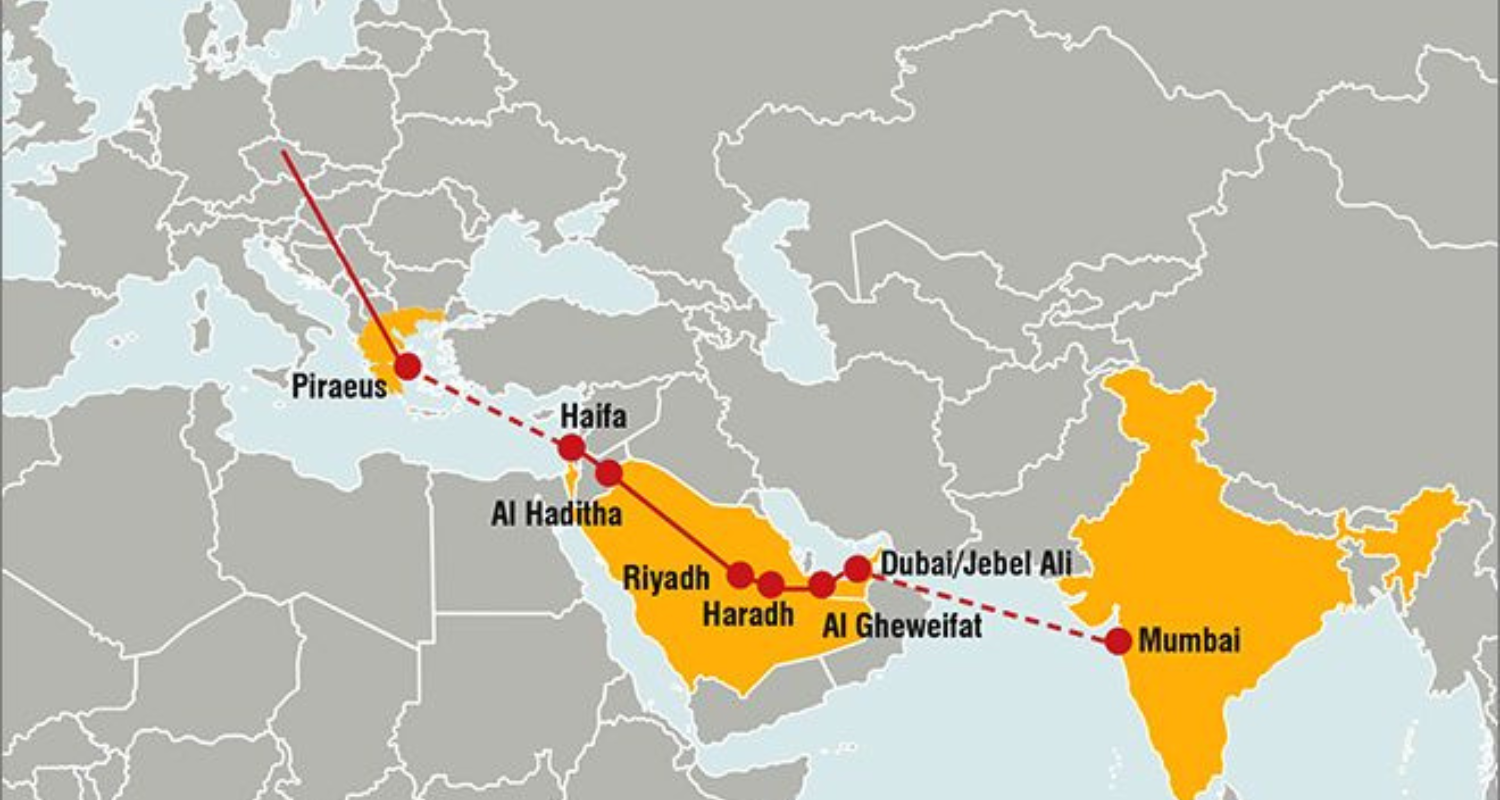
The agreement has also shifted the tone of business engagement. Instead of focusing solely on transactions, executives are discussing integrated value chains. Ports, warehouses, payment systems and digital platforms are being viewed as shared infrastructure for a broader India-UAE economic corridor.
Investment Takes Centre Stage
Trade may provide the headlines, but investment is becoming the partnership’s defining story. UAE capital has moved steadily into Indian infrastructure, logistics, real estate, food processing and other high-growth sectors. Cumulative UAE foreign direct investment in India reached US$25.59 billion between April 2000 and March 2026, placing the UAE among India’s leading overseas investors.
The flow is increasingly two-way. Indian companies are investing in the Emirates to build regional headquarters, expand service operations and establish links to international customers. In 2025, India was the leading source of greenfield foreign direct investment into the UAE, committing US$12.6 billion across 275 projects, according to the UAE Ministry of Foreign Affairs.
This two-way investment pattern gives the partnership greater staying power. It means both countries have a direct stake in the other’s success. A port investment in India, a financial-services platform in Dubai or a clean-energy venture spanning both markets can create jobs, capability and lasting commercial ties that extend well beyond a single trade cycle.
The Next Chapter Is Innovation
The next phase of India-UAE cooperation will likely be defined by the industries shaping the global economy. Digital payments, artificial intelligence, climate technology, smart logistics and food security are moving to the centre of bilateral discussions. These sectors demand capital, policy coordination, data infrastructure and skilled talent, areas where the two countries bring different but complementary strengths.
India’s innovation ecosystem has produced globally competitive technology firms and a large base of engineers, founders and digital consumers. The UAE, meanwhile, has positioned itself as a fast-moving hub for capital, global connectivity and regulatory experimentation. Together, the two markets can create a testing ground for ideas that serve not only their own populations but also markets across Asia, Africa and the wider Gulf.
As India enters a new decade of national ambition, the UAE relationship offers an important lesson in modern diplomacy. The strongest partnerships are not built merely on shared statements. They are built through businesses that invest, founders who collaborate, ports that move goods faster and institutions willing to imagine a larger common future. The India-UAE story is now one of shared momentum, with both nations looking well beyond the horizon.