
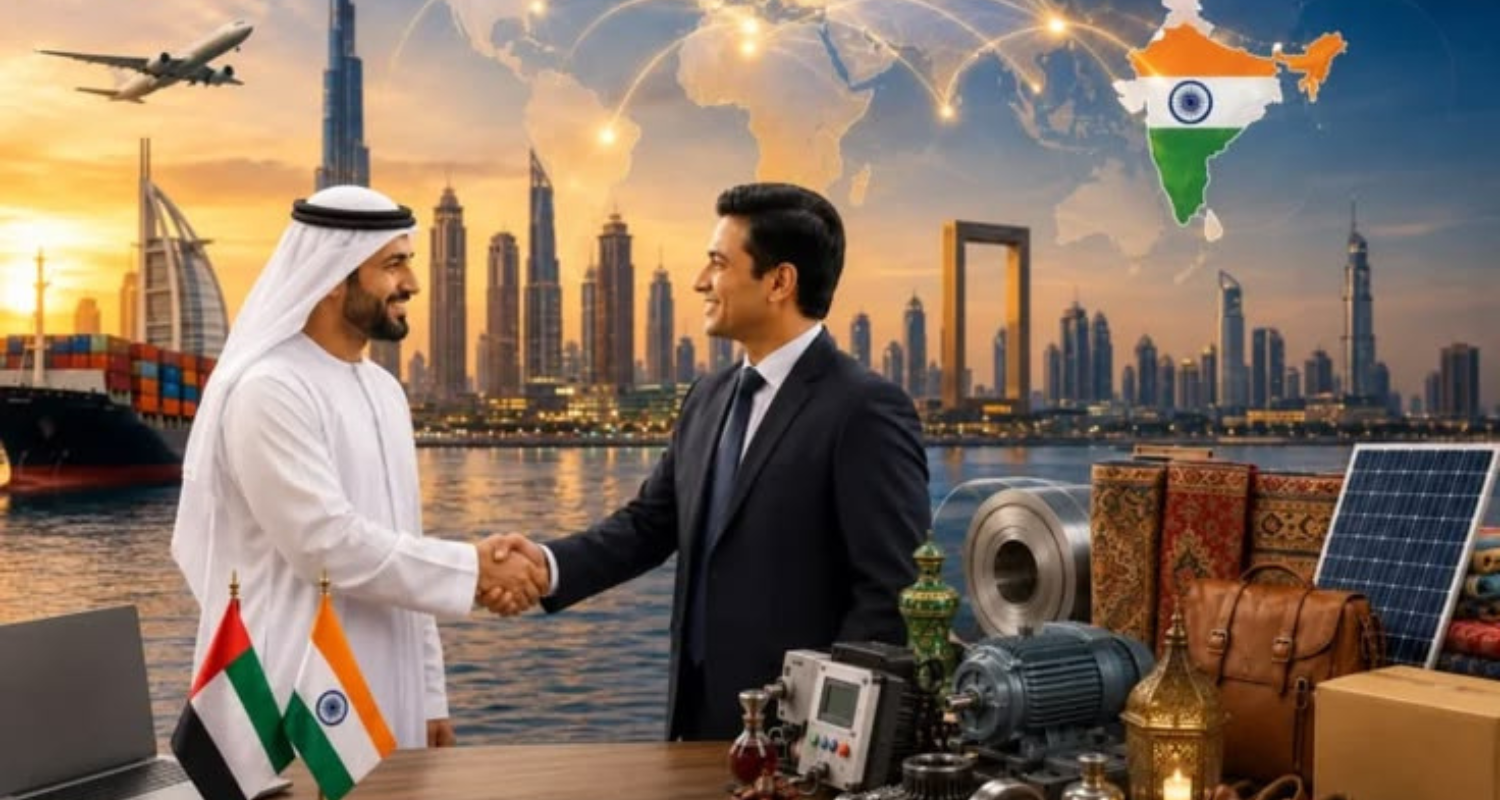

The India-UAE relationship is entering a more ambitious chapter, shaped not simply by the movement of goods but by the movement of ideas, capital and skilled people. For Fursa Consulting, the opportunity lies in helping businesses recognize that this is no longer a conventional bilateral trade story. It is a rapidly developing economic corridor connecting India’s scale and innovation capabilities with the UAE’s global connectivity, investment capacity and market access.
The numbers illustrate the momentum. Bilateral merchandise trade surpassed US$101 billion in FY 2025-26, and both countries have set a target of US$200 billion by 2032. Yet the larger story is unfolding beyond headline trade figures, in technology partnerships, startup ecosystems, energy transition projects and talent-led business expansion.indembassyuae.
A Corridor Built for Global Ambition
For decades, India and the UAE have shared a commercial relationship rooted in trust, diaspora connections and geographic advantage. Dubai became a natural gateway for Indian exporters reaching the Gulf, Africa and wider international markets, while the UAE emerged as a major destination for Indian products, professionals and entrepreneurs. That historical foundation is now being adapted for a more complex global economy.
The Comprehensive Economic Partnership Agreement, which entered into force in May 2022, accelerated this shift by creating a clearer framework for trade, investment and services. In practical terms, it has given companies more confidence to plan long-term market entry, pursue partnerships and build supply chains that connect Indian production with UAE-based logistics and distribution networks.
For Fursa Consulting, the significance of this evolution is strategic. Businesses do not need to view the UAE solely as an export market or India solely as a sourcing destination. The stronger proposition is to treat the two countries as linked platforms: India as a hub of manufacturing, digital capability and entrepreneurial depth, and the UAE as a launchpad for regional expansion, capital access and international trade.
Trade Moves Beyond Traditional Goods
Trade remains the visible engine of the partnership, with petroleum products, gems and jewellery, food, textiles, chemicals, electronics and engineering goods forming an increasingly diverse commercial basket. But the next phase will be defined by how efficiently companies can build value around those products through logistics, financing, branding, digital systems and cross-border customer access.
That requires a different kind of business thinking. A manufacturer may begin with exports to the UAE, but eventually establish a regional distribution base in Dubai or Abu Dhabi. A UAE investor may identify India not merely as a large consumer market, but as a place to build renewable-energy assets, technology ventures or advanced industrial capacity. In both directions, the strongest commercial outcomes increasingly depend on partnerships that extend beyond a single transaction.
The UAE’s role as a global trading and investment hub makes it especially valuable for Indian companies aiming to reach new markets. At the same time, India’s economic depth, expanding infrastructure and large talent base offer UAE firms a compelling route into high-growth sectors. The relationship is becoming less about moving products from point A to point B and more about jointly creating businesses designed for international reach.
Technology Creates a New Common Language
Technology is transforming the bilateral agenda from an economic partnership into a future-focused collaboration. India and the UAE have identified areas including artificial intelligence, fintech, healthcare innovation, digital payments, renewable energy, critical minerals and space infrastructure as strategic fields for cooperation. Leaders from both countries have also discussed collaboration on AI, emerging technologies, supercomputing and data centres.indembassyuae.
For companies working across this corridor, the implications are substantial. Indian technology firms can find a commercially sophisticated environment in the UAE, where public and private institutions are investing heavily in digital transformation. UAE-based investors and enterprises, meanwhile, can engage with India’s large technology ecosystem, ranging from established IT services providers to fast-growing startups in financial technology, health technology, education technology and climate innovation.
Fursa Consulting sees this technology relationship as an opportunity to bring together complementary strengths. The UAE can offer a high-visibility base for testing and scaling global-facing innovations. India can provide technical talent, product development capacity and a vast environment for building solutions at scale. When these strengths converge, the result can be more durable than a standard vendor relationship: it can become a shared platform for innovation.
Talent Turns Policy Into Progress
No economic corridor can reach its full potential without people who understand both markets. Talent has always been central to India-UAE ties, particularly through the Indian community’s longstanding contribution to the UAE’s economy. Today, however, the conversation is broadening from workforce mobility to professional standards, skills development, entrepreneurship and the creation of knowledge-based industries.
Both governments have emphasized the importance of upskilling, skills frameworks and stronger cooperation in training, exchanges and apprenticeships. These measures matter because the industries driving the next phase of growth, from AI and clean energy to advanced logistics and digital finance, require specialized capabilities as well as cross-cultural fluency.
For Fursa Consulting, talent is not a supporting detail in the India-UAE narrative. It is the connecting force that allows trade agreements to become operating businesses, investment commitments to become projects, and technology ambitions to become commercially viable ventures. The leaders, founders and professionals who can navigate both markets will shape the corridor’s most valuable opportunities.
As India and the UAE work toward their US$200 billion trade ambition, the real measure of progress may not be the final number alone. It will be the strength of the companies built, the technologies commercialized and the people empowered along the way.