


China’s leadership is beginning to talk openly about a “temperature gap” inside its own economy – a country running feverishly hot in advanced technology while older industries and ordinary workers report conditions that feel distinctly cold. That rhetorical shift opens a window into how Beijing is trying to manage a profound economic transition without losing the people who built its earlier boom.
A Tale Of Two Economies
In the official numbers, China still looks broadly healthy. Growth hovers near targets, high-tech output surges, and artificial intelligence, robotics and clean energy projects dominate government speeches and investment plans. Yet away from the headline data, the lived experience in many factory towns and small-business districts is more subdued. Shops cut hours, local manufacturers trim shifts and graduates from non‑tech backgrounds quietly recalibrate their expectations.
That tension is what a recent commentary in Qiushi, the Communist Party’s flagship theoretical journal, tried to capture with its “temperature gap” metaphor: macro indicators as the economy’s thermometer, and household and business sentiment as the “feels‑like” reading. The phrase gently acknowledges something that entrepreneurs, exporters and urban youth have been debating for years – that the same national story can feel very different depending on whether you work in a data center or a textile mill. By making this divide explicit, Beijing is not declaring a crisis so much as signaling that it sees the problem and wants to manage it. The question is whether recognition alone can bridge an increasingly stark contrast between hot and cold zones in the real economy.
Inside The Tech Surge
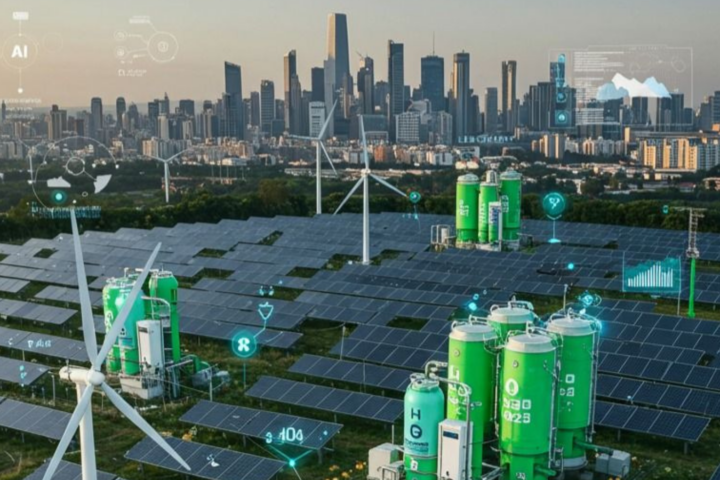
China’s tech boom is not a mirage. It is fueled by deliberate policy choices, vast pools of domestic savings and an urgent desire to secure self‑reliance in strategic sectors from semiconductors to clean energy hardware. New industrial parks dedicated to AI, advanced manufacturing and green technologies have sprung up across the country, often on land once occupied by more traditional factories.
In these hubs, the temperature feels almost tropical. Venture capital chases algorithmic breakthroughs. Municipal authorities roll out incentives to attract robotics firms and chip designers. Young engineers with elite degrees move between start-ups and state-backed champions, riding a wave of innovation that promises both national prestige and personal advancement. The narrative here is one of transformation: old supply chains refitted with sensors, legacy manufacturers rebranded as part of the “digital economy,” and cutting-edge labs positioned as the vanguard of China’s next growth chapter.
At the same time, this ecosystem is capital-intensive and highly specialized. It creates fewer broad-based jobs than the construction sites, garment plants and assembly lines that powered China’s earlier decades of expansion. For workers in those sectors, the tech boom can feel less like an opportunity and more like something happening in a different country altogether.
Traditional Industries In A Cold Snap
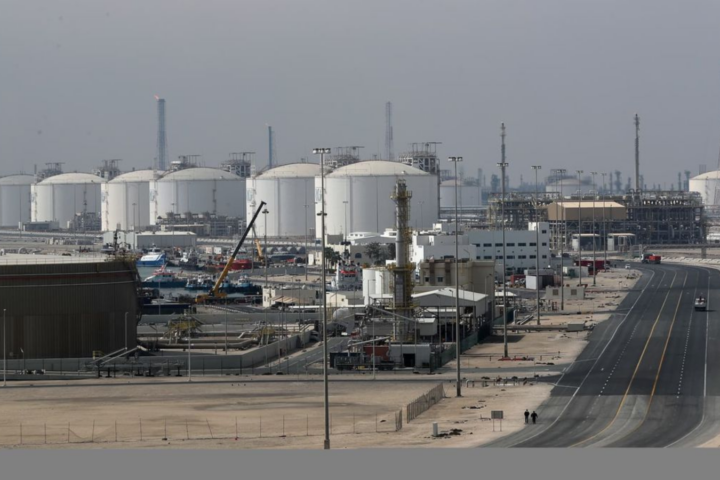
On the other side of the temperature divide sit the industries that once defined China’s rise: property, heavy manufacturing, low-margin export production and the dense network of small and medium enterprises that feed into them. Here, the climate has cooled. A multi-year effort to deflate a dangerous property bubble and rein in local government debt has removed the “oxygen” that sustained construction and its upstream suppliers, from steel and cement to home furnishings.
Factories that produced mid-tier consumer goods and components now grapple with overcapacity, tighter credit and ruthless price competition. Producer prices have been under pressure, while input costs remain sticky. For many owners, the challenge is not simply to modernize but to survive, as orders fluctuate and margins thin. Workers feel the chill in more precarious contracts, fewer overtime hours and delayed wage growth, realities that do not show up in aggregate GDP charts.
The psychological impact is just as important. When people sense that their own corner of the economy is cooling even as official narratives celebrate record robot exports or breakthrough AI models, trust can fray. The “temperature gap” becomes not only an economic condition but an emotional one, with uncertainty and caution replacing the optimism that once defined China’s boom years.
Bridging The Temperature Gap
Qiushi’s choice to spotlight this divide suggests that Beijing understands the risks of an uneven transition. The commentary’s message is that macro policy is broadly correct, but implementation must be more precise and communication more attuned to how businesses and households actually feel. That includes stabilizing expectations, improving the delivery of existing support measures and ensuring that growth in advanced sectors does not come at the cost of social cohesion.
Policymakers and commentators sympathetic to the tech push argue that the dichotomy itself is exaggerated – that high-tech and traditional industries are increasingly intertwined, and that digital tools are already upgrading legacy sectors rather than replacing them outright. They point to examples like AI-enhanced logistics, data-driven steel plants and smart textile production as evidence of a more complex reality than a simple hot-versus-cold story.
The challenge is time. Structural transitions rarely move at the speed of political messaging. Retraining workers, reconfiguring supply chains and building robust social safety nets to cushion shocks are long-term projects. In the meantime, the “feels‑like” temperature in many communities will be shaped less by visionary speeches about future industries than by immediate signals: steady paychecks, visible investment in local businesses and pathways for younger generations that extend beyond a narrow slice of the tech elite.
China’s decision to name its temperature gap, however cautiously, marks an important moment. It is an acknowledgment that in an age of dazzling innovation, the real measure of economic health is whether the warmth reaches the people standing farthest from the center of the storm.