

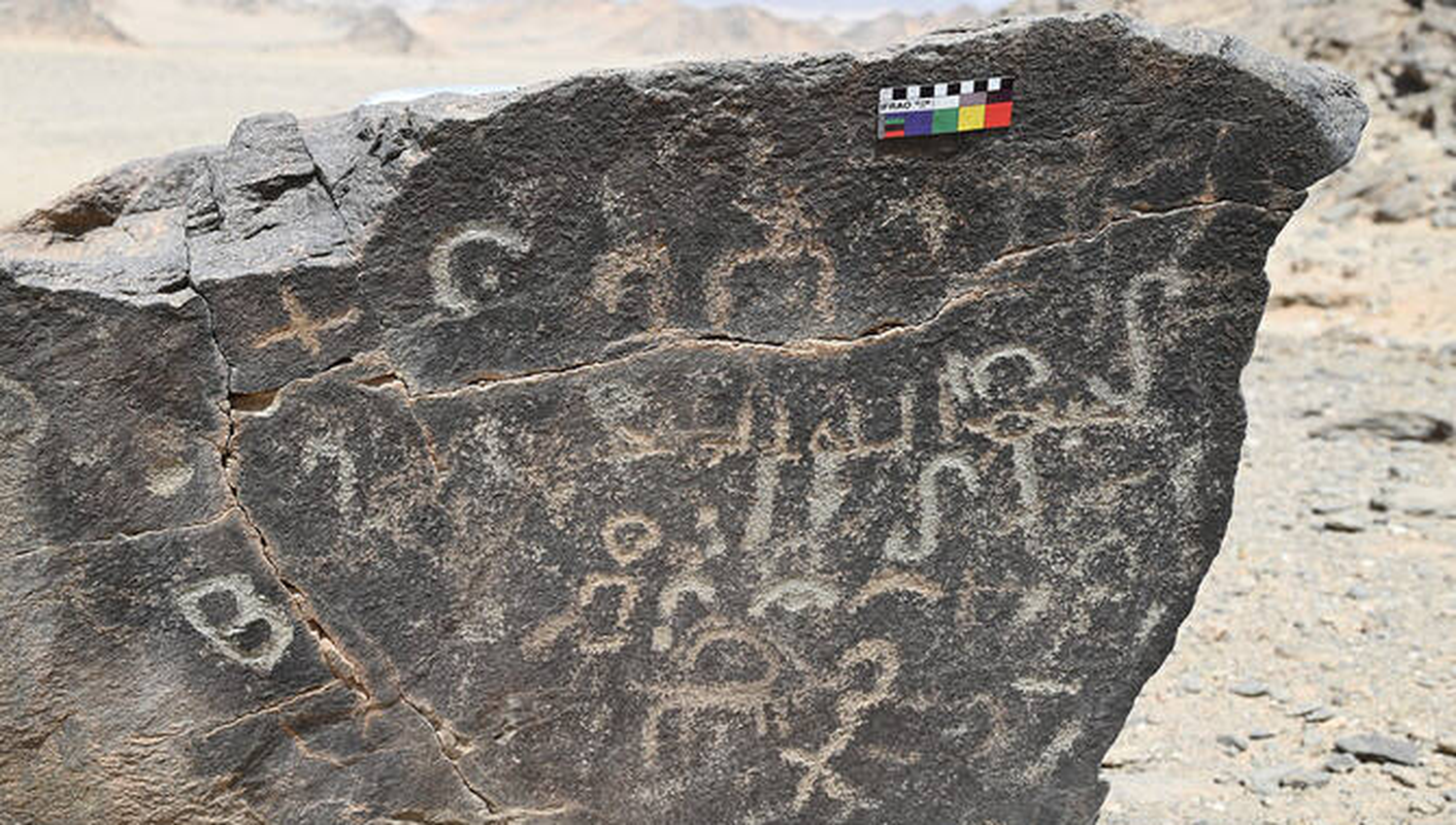
Saudi Arabia’s Heritage Commission has documented 103 archaeological sites in High Najd, the outcome of the first phase of a project to survey and record rock inscriptions and rock art across the Riyadh Region.
A scientific team spent 30 days in the field, working through several locations in the area. The sites logged during that period contain stone structures, inscriptions, and rock art showing animal and human figures alongside other motifs.
High Najd is a large geographical area that makes up much of central Saudi Arabia, and the survey zone extends well past Riyadh itself. It takes in parts of central and western Riyadh, the Qassim and Hail regions, the eastern portions of the Makkah and Madinah regions, and the northeastern part of Asir Province.
The commission said the range of material recovered points to human activity in the area across different historical periods, and to the cultural and environmental character of the region over time.
The project falls under the commission’s scientific programmes, which are aimed at widening the coverage of archaeological surveys in the Kingdom and building out the national database of heritage sites.
According to the commission, the next phase will finish the remaining survey work and carry out specialised studies on what has already been identified. Sites confirmed through that process are to be entered in the national register of antiquities, the official record of protected archaeological locations in Saudi Arabia.
The commission also said it intends to broaden public awareness of why archaeological sites need protection, framing them as part of the Kingdom’s history and cultural heritage.
No timeline was given for the second phase, and the commission did not say when the newly identified sites would be added to the register.