

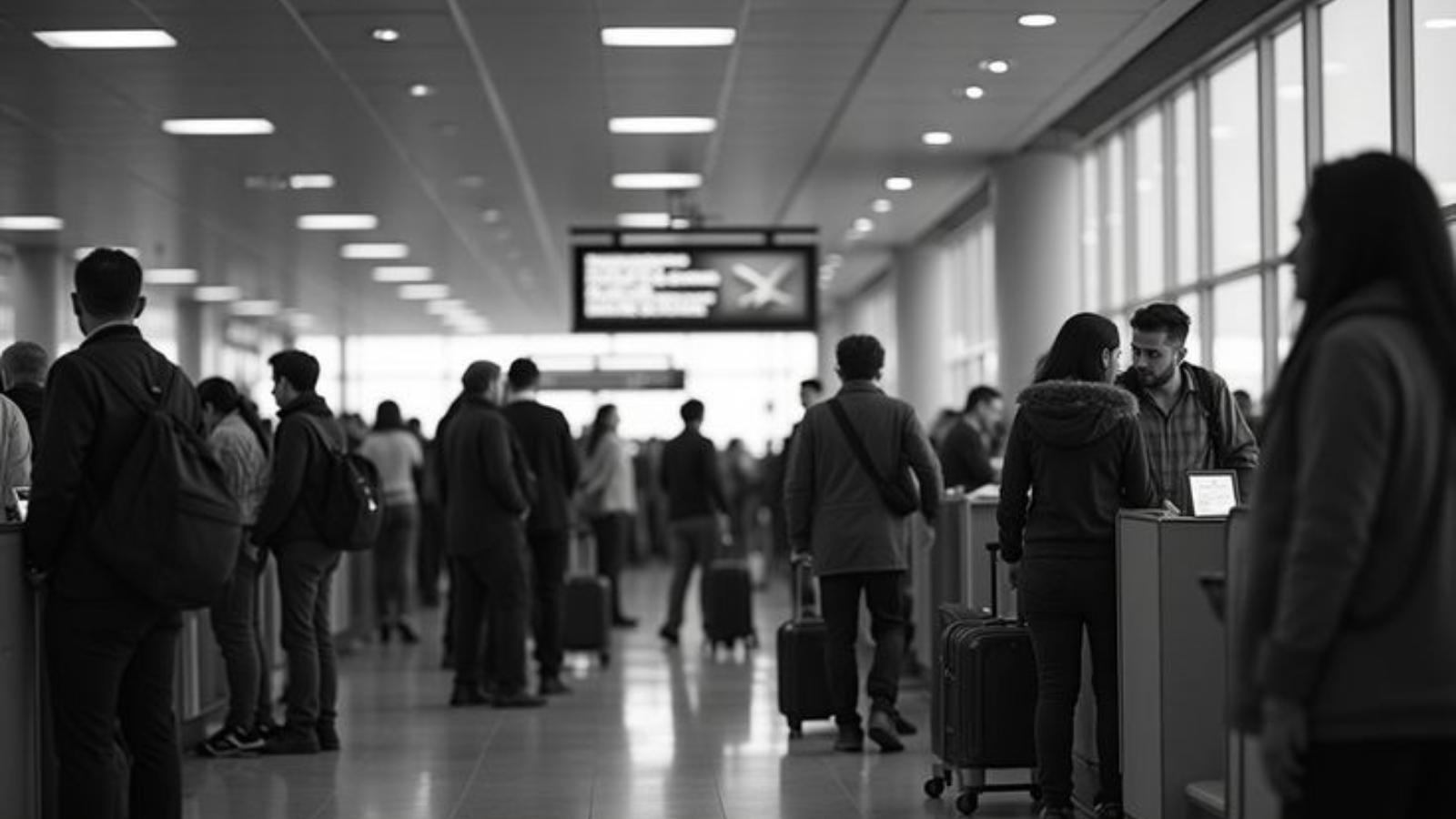

Air travel across a vast stretch of the Middle East came to an abrupt halt as multiple countries closed their airspace with little warning, triggering a wave of cancellations that rippled far beyond the region. Airports that typically operate around the clock found themselves unusually quiet, with departure boards flashing cancellations in rapid succession and travelers scrambling for answers.
The shutdown, which unfolded within hours, left airlines with limited options. Flights already en route were diverted, while thousands more were grounded before takeoff. For passengers, the disruption meant missed connections, extended layovers, and an uncertain timeline for resumption. For aviation authorities, it marked a rare moment of coordinated restriction across a region that serves as a vital corridor between continents.
Behind the scenes, airline operations teams worked frantically to reroute aircraft and reposition crews. Yet even the most agile carriers struggled to adapt to the sudden loss of key air corridors. The scale of the disruption underscored just how central Middle Eastern airspace has become to global aviation networks.
The Global Ripple Effect
The impact of the closures quickly extended beyond regional boundaries, affecting long-haul routes linking Europe, Asia, and Africa. Flights that would normally traverse the Middle East were forced to take longer, less efficient paths, adding hours to travel times and significantly increasing fuel consumption.
Airlines faced a difficult balancing act. While some opted to suspend services entirely, others attempted to maintain operations by navigating alternative routes. These detours, however, came at a cost. Increased operational expenses and logistical complexity placed additional strain on carriers already operating within tight margins.
Passengers across the globe felt the consequences. Travelers departing from cities thousands of miles away encountered delays and cancellations tied directly to the disruption. In many cases, the interconnected nature of modern aviation meant that a closure in one region triggered a cascade of scheduling challenges worldwide, revealing the fragile equilibrium that keeps global air travel running smoothly.
Human Stories Behind the Delays
Amid the logistical chaos, individual stories began to emerge, painting a more personal picture of the disruption. Families found themselves stranded in transit hubs, unsure when they would reach their destinations. Business travelers missed critical meetings, while others faced the emotional toll of delayed reunions or disrupted plans.
Airports became temporary holding spaces where uncertainty lingered in every conversation. Lines at customer service desks grew longer as passengers sought rebooking options, often competing for limited seats on the few available flights. Hotel accommodations filled quickly, and for some, the wait extended into days rather than hours.
Despite the frustration, moments of resilience surfaced. Travelers shared resources, offered advice, and formed brief connections forged by shared inconvenience. Airline staff, operating under intense pressure, worked to provide updates and support, even as the situation evolved faster than information could be reliably communicated.
Uncertainty and the Path Forward
As authorities assess the situation, questions remain about how long the restrictions will last and what conditions must be met for airspace to reopen. Aviation experts note that such closures are rarely lifted quickly, particularly when safety concerns are involved. The gradual restoration of normal operations is likely to be a complex and carefully managed process.
In the meantime, airlines are revisiting contingency plans and evaluating how to build greater resilience into their networks. The incident has reignited discussions about the vulnerability of global air travel to sudden geopolitical shifts and the need for more adaptable routing strategies.
For travelers, the disruption serves as a reminder of the unpredictability inherent in modern mobility. While air travel has become routine, events like this reveal how quickly that routine can be upended. As the situation continues to develop, both passengers and industry stakeholders are left navigating an uncertain landscape, waiting for stability to return to the skies.