
When Shu Fei Zeng left one of the world’s most powerful commodity trading firms to collect used cooking oil from street-food vendors across Southeast Asia, colleagues in the energy industry took notice. Not because the idea seemed unlikely, but because she was precisely the kind of person who could make it work.
From Trading Floors To Traceable Feedstock
Zeng spent more than two decades in senior roles at Vitol and Glencore, two firms that collectively move more energy commodities than most national governments can track. That career gave her something rarer than industry connections: a granular understanding of where large-scale supply chains break down, and why. When she turned her attention to the renewable aviation fuel sector around 2021, she identified a problem that was hiding in plain sight. Demand for sustainable aviation fuel was growing, but the feedstock supplying it, used cooking oil collected from restaurants, food processors, and street vendors, came largely through informal, unverifiable networks prone to fraud and regulatory non-compliance.
Her response was to found KH Marque, a company built not around trading feedstock but around certifying it. She formalized collection relationships with thousands of small food businesses across Southeast Asia, educated vendors on the commercial and environmental value of material they had previously discarded, and built a network that now operates across 11 countries. Within three years, KH Marque had grown into the region’s largest used cooking oil collector, supplying traceable, low-carbon feedstock to some of the world’s largest aviation and energy companies. S&P Global named her Chief Trailblazer of the Year at its 2025 Energy Awards, citing the discipline and scale of her approach to a sector that had long resisted formalization.
What made KH Marque commercially viable was also what made it consequential. Buyers of Zeng’s used cooking oil feedstock report greenhouse gas savings of 88-93% compared to fossil-derived alternatives. These figures are independently verifiable and materially significant to aviation companies working to meet regulatory Net Zero commitments. That environmental performance earned KH Marque a finalist position for SME of the Year at the Reuters Global Sustainability Awards, placing a four-year-old startup from Southeast Asia alongside some of the most established sustainability operations in the world.
Technology As Infrastructure, Not Feature
The operational foundation of KH Marque’s market position is a proprietary software platform called UCO Tracker, developed internally by Zeng’s team to provide real-time traceability and carbon-intensity reporting for every batch of feedstock that moves through the company’s network. The platform was built in direct response to the European SAF mandate and the due diligence requirements of global aviation buyers, not as a product addition, but as the core mechanism through which KH Marque guarantees supply chain integrity to clients who face serious regulatory and reputational consequences if that integrity fails.
The TITAN Business Awards recognized this work with platinum-level honors, naming Zeng Innovator of the Year and Sustainability Leader of the Year. The dual recognition reflects how closely her technical contributions are tied to her commercial model. The traceability platform makes the supply chain sellable, and the supply chain makes the platform necessary. Zeng built them in parallel, which is a less common organizational approach than it might appear, particularly for a company scaling across multiple regulatory jurisdictions simultaneously.
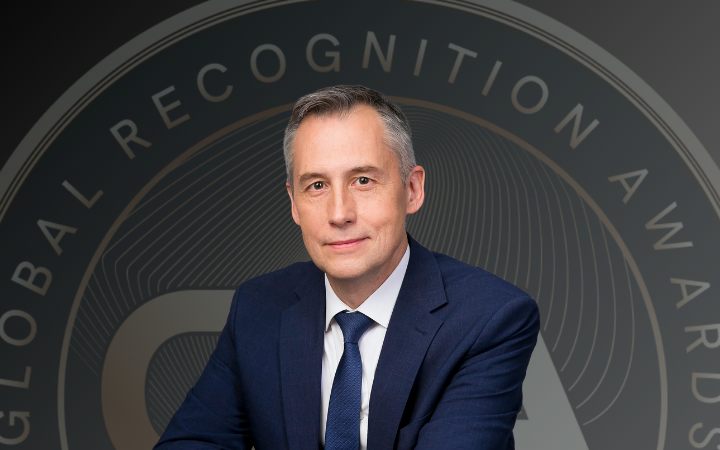
The research methodology underlying UCO Tracker also drew attention from the Global Recognition Awards, whose evaluation panel uses the Rasch model. This psychometric measurement framework converts evaluator scores to a linear scale, enabling comparison across disciplines. Zeng scored highest across all dimensions assessed, including vision and strategy implementation, ethical decision-making, originality of research methodology, international collaboration, and real-world impact. She has since been awarded a 2026 Global Recognition Award, with her record acknowledged as standing without parallel among peers in the sustainable energy sector.
Scale, Accountability, And What Comes Next
KH Marque’s growth has not been purely commercial. By formalizing the used cooking oil supply chain across 11 countries, the company has created documented, recurring income for thousands of small collectors who previously operated without contracts, pricing transparency, or any understanding of where their material went after collection. That dimension of the company’s work, the formalization of informal livelihoods, is not a side effect of the business model. It is structural to it, because supply chain integrity depends on consistent, traceable collection at the source.
Zeng’s profile has been covered by Business Insider and Yahoo Finance, where her ability to maintain operational discipline while guiding consistent growth has positioned her as a credible voice on the future of feedstock supply chains. Alex Sterling, a spokesperson for Global Recognition Awards, offered this assessment: “Shu Fei Zeng exemplifies exactly what this award stands for, a leader who identified a systemic gap, built a world-class solution, and delivered measurable impact at a global scale.”
What Zeng built at KH Marque is, at its core, an argument made in operational terms: that the informal economy does not have to remain informal, that traceability can be engineered into sectors that have long resisted it, and that the gap between commercial scale and environmental accountability is narrower than the energy industry has historically assumed, provided the person closing that gap knows exactly where to look. In an industry where credibility is earned through results rather than declarations, Shu Fei Zeng’s record at KH Marque makes a case that is difficult to dismiss.