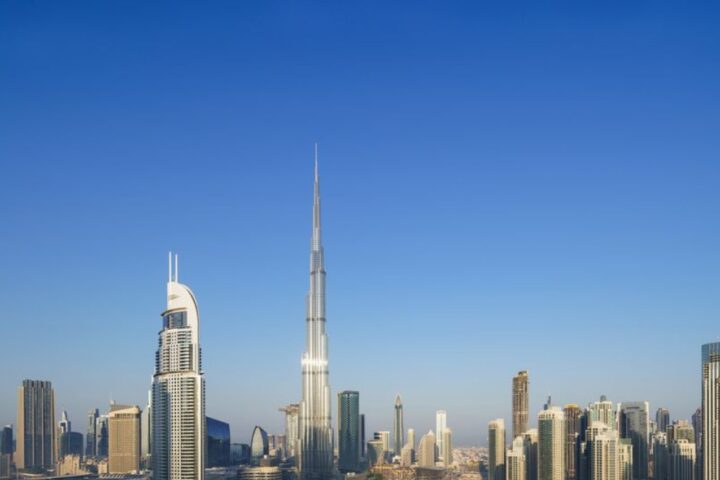


Real estate in Dubai is often photographed as a skyline and spectacle, yet its quieter role is increasingly important: it has become part of the city’s financial machinery. Instead of acting only as a final destination for capital, property is now used to move money between opportunities, manage liquidity, and cover timing gaps in deals. This more active role has emerged just as regulators tighten oversight and more international money flows into the Gulf, forcing investors to think harder about how their risks are built and who ultimately carries them.
Firms like Hedge & Sachs are part of this change. Founded in 2019 as a small self-funded trading desk with “two desks, a couple of determined minds, and one belief” in disciplined, risk-conscious investing, the company has grown into a fully licensed advisory firm under the UAE Securities and Commodities Authority (SCA), with a 200-member team and more than 4,000 clients worldwide. From that base, it has pushed beyond pure markets into what it describes as a move “from capital to concrete,” using Dubai real estate not only as an asset class but as part of the city’s capital infrastructure.
When Property Becomes Capital Infrastructure
Dubai’s property market heading into 2025 did not look like the pure boom cycles of the past. More capital was flowing into structured deals, milestone-based funding, and cross-border mandates that rely on real estate as collateral rather than simply buying for appreciation. Developers under pressure to meet project timelines and match demand for both mid-market and premium housing turned to bridge finance and private capital to secure plots, obtain permits, and keep construction moving while long-term loans and institutional partners caught up.
Bridge financing moved into the center of that system. Short-term facilities backed directly by property helped smooth the mismatch between the moment a deal needed to close and the slower pace of banks and long-term lenders. Instead of waiting for the entire financing stack to be finalized, sponsors could commit to off-plan inventory or land, with repayment tied to sales milestones and construction progress rather than an abstract credit model. Real estate, in that setup, acts less like a static prize at the end of the transaction and more like the structure that holds the transaction together.
For international investors, including family offices and high-net-worth clients watching low bond yields and volatile equities, Dubai’s property-backed structures became part of portfolio construction, not just a side bet. Hedge & Sachs responded by threading real estate exposure into its multi-asset strategies. On its website, the firm describes itself as an advisory-driven investment house that designs diversified, risk-managed funds “built to preserve capital, manage risk, and create alpha,” with asset-linked plays in sectors such as Dubai property sitting alongside equity, fixed income, currency, and commodities positions.
Hedge & Sachs And The Architecture Of Deals
Hedge & Sachs’ own story mirrors the way real estate has become capital infrastructure. After starting as a trading operation, it built a multi-jurisdictional architecture spanning the Cayman Islands, Luxembourg, and India, and now describes itself as a “global alternative investment platform” serving investors from individuals to institutions and sovereign entities. The firm’s move into real estate has been deliberate: through its subsidiaries Foremen Fiefdom and Money Plant, it has connected more than 1,000 clients to “Dubai’s most promising properties,” and, in collaboration with Zenith Developments, launched ARMAS, a premium residential project in Dubai South.
These projects are not presented as standalone bets. They feed back into asset-linked strategies that use property performance as a key driver of returns. A client might hold units in a multi-asset global fund, currency trades, and a property-linked note, with each line playing a specific role within a single advisory framework. Real estate becomes part of the portfolio’s infrastructure, a way to route capital through bricks and concrete rather than leaving it only in financial instruments.
For Noorina Saifulla, a spokesperson for Hedge & Sachs, the way clients talk about their holdings often hides that reality. “When clients tell us they are ‘heavily in real estate,’ what they usually mean is they own an apartment and some REIT units,” she said in discussing Dubai’s market dynamics. “The surprising part is that the real estate that actually stabilizes their portfolio is often invisible to them; it sits behind a bridge facility or an asset-linked fund they think of as ‘fixed income,’ even though it lives and breathes with the Dubai skyline.”
Beyond Towers And Titles
Hedge & Sachs likes to describe its journey as moving from trading markets to “building them,” and that phrase captures something larger about Dubai today. From ARMAS in Dubai South to the many less visible projects financed through bridge facilities and asset-linked funds, real estate has become part of the city’s capital infrastructure: a network of assets that supports cash flows, risk-sharing, and cross-border investment, not just a gallery of towers and titles.
For investors, the appeal of this system lies in the way it routes money through tangible assets while still offering diversified exposure through global funds and multi-asset strategies. For regulators, the concern is whether the structures can carry the load when stress builds. Firms like Hedge & Sachs, with their SCA licenses, multi-jurisdictional platforms, and deep ties to Dubai property, stand as test cases for whether this model can withstand that pressure over time.
As the current real estate cycle continues, the most important story may not be the latest record-breaking project, but the way bricks and concrete now sit inside spreadsheets and term sheets. Real estate in Dubai has moved beyond towers and titles, functioning as capital infrastructure that keeps money moving, holds risk in place, and, when it works, turns a skyline into a system.