


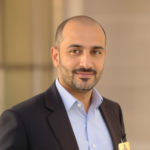
Across Saudi Arabia’s executive corridors, where Vision 2030 has accelerated the pace of institutional change, Bandar AbuAshi has spent 25 years proving a straightforward proposition: the office of the chief executive, when properly structured, can determine whether ambitious strategies succeed or stall.
As Senior Vice President of the Executive Office at the Saudi Tourism Authority, AbuAshi oversees what he describes as a strategic hub rather than an administrative function. Under his leadership, the office achieved three ISO certifications for governance, operational discipline, and quality management. These standards reflect his broader conviction that executive offices should operationalize vision rather than coordinate schedules.
His approach, developed across government, semi-government, tourism, hospitality, and public administration roles, centers on what he calls a disciplined triad: authority, process, and trust. “Authority provides direction. Process provides structure. Trust provides velocity,” AbuAshi says. “When authority exists without process, chaos emerges. When process exists without trust, stagnation follows.”
Building Institutional Infrastructure
AbuAshi’s career has followed a consistent pattern: entering institutions where execution lagged behind ambition and systematically restoring structure. At the Ministry of Tourism, he served as General Manager of the Minister’s Office during a period of national tourism expansion. At the Human Resources Development Fund, he built centers to address stalled initiatives and embedded knowledge management systems.
During eight years at the Royal Commission for Jubail and Yanbu, he modernized executive processes, optimized resource allocation, and automated workflows. The work reflected his operational philosophy: reduce friction, restore clarity in governance, and accelerate institutional alignment.
His method avoids dramatic organizational overhauls in favor of targeted interventions. At the Saudi Tourism Authority, a sector central to the kingdom’s economic diversification efforts, his focus has been on creating systems that allow leadership to execute strategy efficiently while maintaining accountability.
From Private-Sector Discipline To Public-Sector Strategy
AbuAshi’s leadership philosophy was shaped during his years at InterContinental Hotels Group, where he rose from operational roles to the role of Owners’ Representative. The hospitality sector taught him service excellence, financial discipline, brand integrity, and stakeholder management. He later translated these principles into public-sector contexts.
“Hospitality taught me that systems fail when discipline weakens,” he says. “Governance taught me that strategy fails when trust erodes.” That dual perspective, combining private-sector efficiency with public-sector institutional discipline, has become a distinguishing feature of his work.
His academic background reinforces this cross-sector orientation. An Executive MBA graduate with distinction and holder of a BBA in Management Systems, AbuAshi has studied at Harvard Business School, Cambridge University, Oxford University, and IMD. The global exposure informs his approach to integrating international standards with national priorities.
Mentorship And Institutional Legacy
Beyond executive management, AbuAshi has focused on mentoring emerging Saudi talent. Recognized among the top voices on LinkedIn and recipient of a 2025 Global Recognition Award, he emphasizes strategic thinking, disciplined execution, and institutional accountability in his mentorship work.
“Organizations do not fail from lack of effort. They fail from lack of balance,” he argues. His mentorship philosophy mirrors his management approach: identify structural weaknesses, address them systematically, and build capacity for sustained performance rather than short-term results.
As Saudi Arabia continues its national development agenda, AbuAshi’s work serves as a model for how executive offices can function as strategic engines rather than support functions. This shift may determine how effectively institutions translate national ambitions into operational reality.