
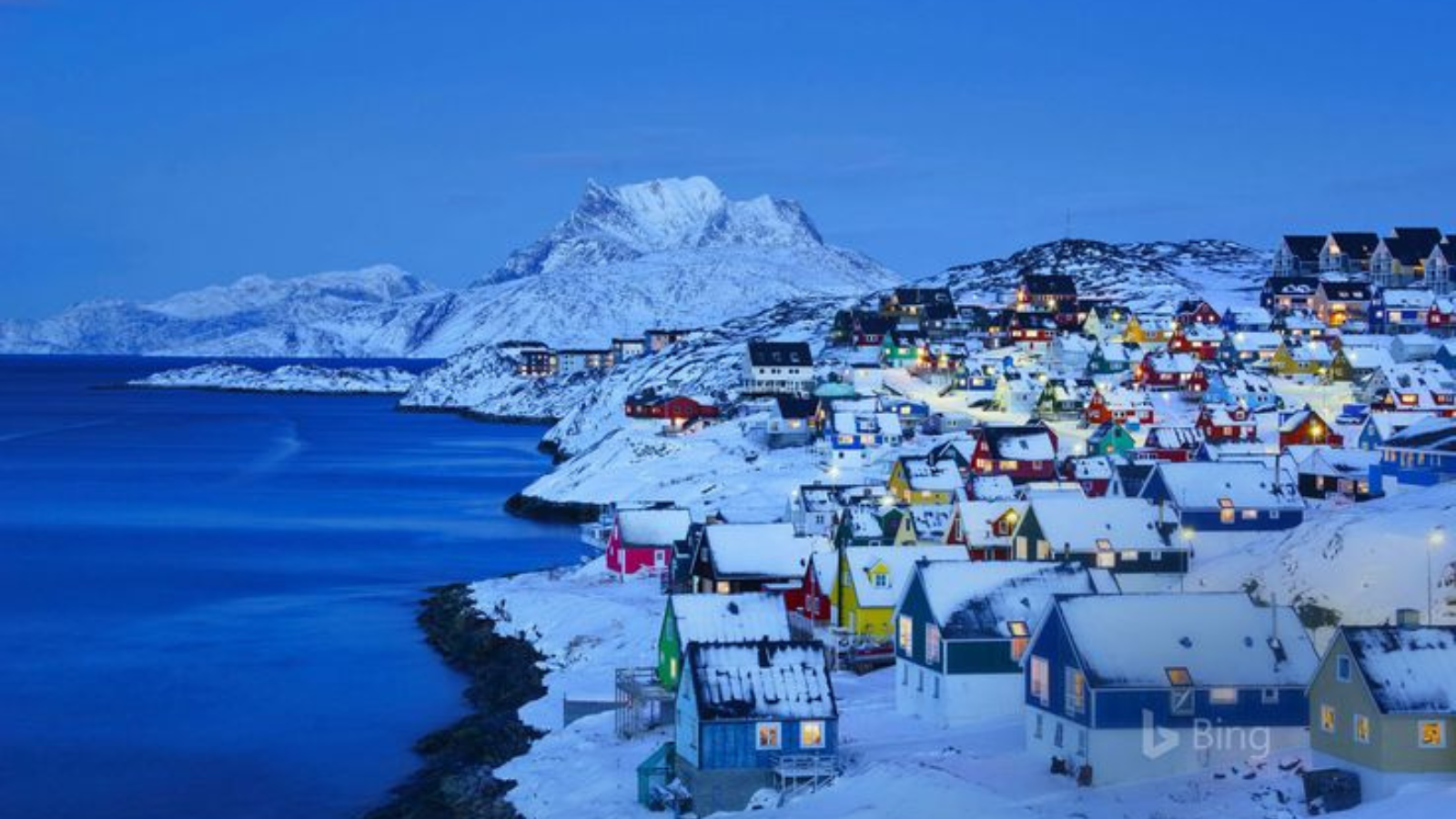

From above, Greenland appears as an endless expanse of white, a frozen monument to the planet’s past. Yet beneath that surface, a transformation is underway. The island’s ice sheet, which holds enough frozen water to raise global sea levels by several meters, is melting at an accelerating pace. What happens here no longer belongs solely to the Arctic. It is a shared global concern with consequences that ripple across continents.
Scientists, policymakers, and indigenous communities are increasingly aligned on one point: Greenland is no longer a remote frontier. It has become a focal point of climate urgency and geopolitical interest. As nations eye its untapped resources and strategic location, the question is no longer whether Greenland will change, but who will shape that change and to what end.
The Limits of National Stewardship
Greenland is an autonomous territory within the Kingdom of Denmark, with growing aspirations for full independence. While its governance structure reflects local priorities, the scale of environmental transformation challenges the capacity of any single nation or territory to act alone. Climate change, by its nature, disregards borders, and the stakes in Greenland extend far beyond national jurisdiction.
At the same time, the island is drawing increased attention from global powers. Interest in rare earth minerals, new shipping routes, and military positioning has intensified, raising concerns about a fragmented approach to governance. Competing interests risk accelerating exploitation at the expense of long-term preservation, turning Greenland into a stage for geopolitical rivalry rather than collective responsibility.
This tension highlights a critical gap. Traditional models of sovereignty may not be equipped to handle regions whose stability is essential to the entire planet. Greenland’s future calls for a broader framework that balances local autonomy with global accountability.
Imagining a Shared Responsibility
The idea of establishing Greenland under a form of international stewardship or global protectorate is no longer confined to academic debate. It is emerging as a pragmatic response to an unprecedented challenge. Such a model would not strip Greenland of its identity or self-determination. Instead, it would embed its governance within a cooperative structure that includes scientific oversight, environmental safeguards, and equitable economic development.
Under this approach, decision-making could involve a coalition of stakeholders, including Greenlandic authorities, indigenous representatives, and international bodies. The focus would shift from short-term gains to long-term sustainability. Investments in renewable energy, climate research, and responsible tourism could replace extractive industries as the primary drivers of economic growth.
Critically, this framework would also establish enforceable protections against environmental degradation. By treating Greenland as a shared global asset, the international community would assume a direct role in preserving its ecosystems while supporting its people. This is not about control, but about stewardship in its truest sense.
A Test Case for Global Cooperation
Greenland presents a rare opportunity to rethink how the world manages its most vulnerable and valuable regions. In an era defined by interconnected crises, from climate change to resource scarcity, traditional governance models are being stretched to their limits. A successful stewardship model here could serve as a blueprint for other critical environments, from the Amazon rainforest to the Antarctic.
The challenge, of course, lies in execution. Questions of sovereignty, funding, and enforcement are complex and politically sensitive. Yet the alternative, a fragmented approach driven by competing national interests, carries far greater risks. Without coordinated action, Greenland’s transformation could accelerate in ways that are both irreversible and globally destabilizing.
There is also a deeper dimension to consider. How the world responds to Greenland will signal its willingness to act collectively in the face of shared threats. It is a test not only of policy but of principle. Can nations move beyond competition to embrace a model rooted in cooperation and foresight?
Preserving More Than Ice
At its core, the conversation about Greenland is not just about ice sheets or sea levels. It is about the kind of future the global community is willing to build. Greenland’s landscapes, cultures, and ecosystems represent more than a geographic territory. They embody a fragile balance that has endured for millennia and now stands at a crossroads.
For Greenlanders, any path forward must respect their rights, traditions, and aspirations. A global stewardship model must amplify, not override, local voices. The goal is not to internationalize control, but to internationalize responsibility. This distinction will determine whether such an approach gains legitimacy or faces resistance.
The urgency is undeniable. As the ice continues to melt, so too does the window for decisive action. Greenland offers the world a chance to act not out of crisis alone, but out of collective vision. Protecting it is not an act of charity or strategy. It is an investment in the stability and sustainability of the planet itself.