
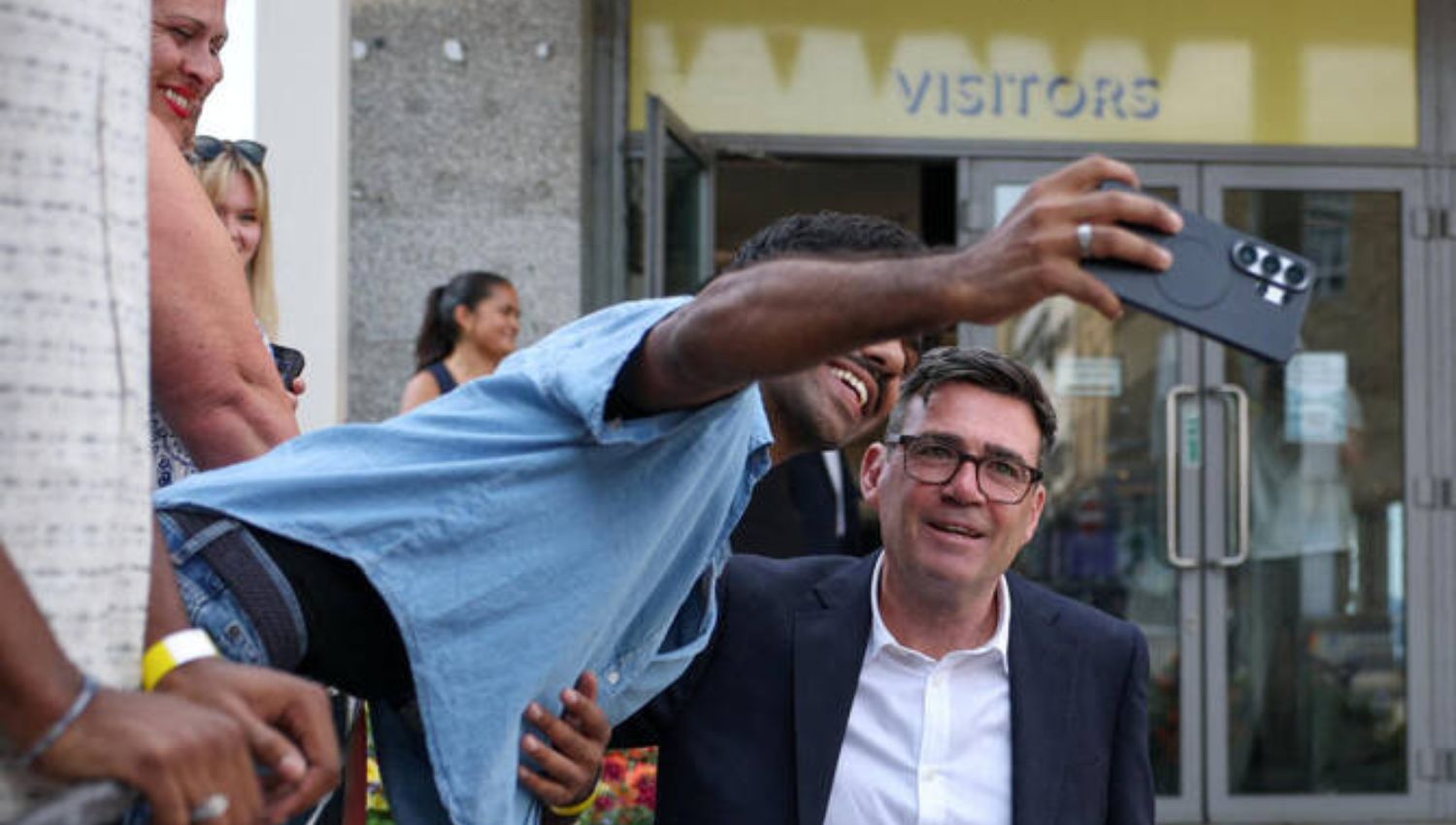
Andy Burnham is poised to become the United Kingdom’s seventh prime minister in just ten years, inheriting a daunting list of problems that have undone a succession of leaders before him — and precious little time to prove himself.
The 56-year-old succeeds Keir Starmer, whose popularity had collapsed only two years after he swept Labour into office with a commanding election win that ended 14 years of Conservative government.
Having been invited by King Charles III to form a new administration, Burnham is scheduled to deliver his opening address on Monday from outside 10 Downing Street, following Starmer’s departing remarks. His team said he would outline plans aimed at “restoring confidence in government and giving Britain more breathing room” as households continue to struggle with rising costs. Boosting economic growth and handing greater authority to regional areas are also expected to be central themes.
Senior cabinet posts are due to be confirmed the same day, with particular attention on who will step in for Rachel Reeves at the Treasury.
Once the mayor of Greater Manchester and widely dubbed the “King of the North,” Burnham was brought in by Labour after Starmer stepped down last month. Party colleagues regard him as their strongest bet for halting the rise of Nigel Farage’s Reform UK.
A Push for Bolder Change
Speaking on Sunday, Labour deputy leader Lucy Powell argued that Burnham’s time governing outside Westminster had given him a firm grasp of the “bigger, bolder measures” required to fulfil the party’s manifesto commitments.
His pressing worries include a stagnant economy, costly government borrowing, a swelling welfare budget, and continued small-boat crossings that have driven voters toward Reform. Fluctuating energy costs stemming from the US-Iran conflict and the unpredictability of US President Donald Trump could further complicate his time in office.
Powell told the BBC that Burnham intended to “radically” overhaul what she described as an “over-centralized” political structure and an economic system that favored powerful interests over everyday citizens. She said the goal was to give people stable jobs, affordable homes, communities they could take pride in, and confidence that their children would have real opportunities ahead.
Starmer confirmed in late June that he would quit as both prime minister and party leader following a run of controversies, blunders, and reversed decisions that weighed down his tenure.
Burnham, who only re-entered Parliament four weeks ago, faces tight constraints: weak growth, heavy public debt, and rigid fiscal rules demanding that spending stay aligned with tax income.
Monday’s transition will start with Starmer traveling to Buckingham Palace to submit his resignation to the king before addressing the nation briefly outside Number 10. Burnham will then make his own journey to the palace ahead of his inaugural speech, which he intends to frame as a moment of “reflection and resolution,” insisting the country must be candid about the difficulties it confronts.
A Final Opportunity for Labour
Burnham previously sat in Parliament from 2001 to 2017, holding ministerial roles under both Tony Blair and Gordon Brown. In the years since, he has recast himself as an approachable, down-to-earth figure, pairing a casual public manner with polished social media output.
He has roughly three years to change Labour’s fortunes, with polling suggesting Reform is favored to win the next general election, likely in 2029. Speaking to supporters on Friday, Burnham described his leadership as the party’s “last chance” to get things right.
While detractors claimed Starmer’s team was ill-prepared when it took power in July 2024, Burnham maintains he has a clear “plan.” Still, his rapid, uncontested ascent to the leadership has prompted doubts over how he will deliver on his ambitions.
His first move as leader came on Saturday, when he cancelled Starmer’s signature national digital ID programme, which had been projected to cost £1.8 billion across three years. A spokesperson said the freed-up money and effort would be redirected “to where it’s most needed, such as helping with the cost of living.”