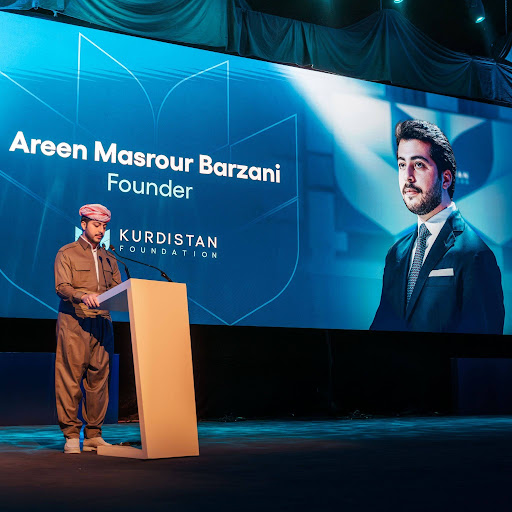
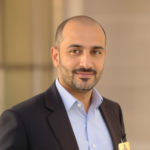
In a land where mountains have witnessed both exile and return, a nation consumed with endless potential and possibilities exists; Kurdistan Foundation was founded to bring structure to the ambitions of its own people. “Belong, build and become; three pillars that uphold the promise rooted in the vision of building a better community,” stated Areen Masrour Barzani in the launch of Kurdistan Foundation; a statement that set a tone for a conversation that is rapidly gaining momentum across the Kurdistan Region: how to prepare a generation for an uncertain but promising future.
As a region long defined by its resilience and resourcefulness, Barzani’s strategy stands out for its clarity of purpose and insistence on measurable results. The son of a storied political family, he has chosen a path that is less about political legacy and more about practical transformation.
Youth empowerment is at the center of his vision, which focuses on education, upskilling, and creating opportunities for young Kurds to thrive in a globalized economy.
A New Generation’s Challenge
The demographic reality facing Kurdistan is stark. More than 60 percent of the population is under 30, and youth unemployment remains a persistent challenge. According to the most recent labor force surveys, the unemployment rate among young people in the region hovered around 25 percent in 2024, a figure that has stubbornly resisted government interventions and economic reforms.
Barzani, however, sees this as an opportunity to build. “We have a generation that is hungry to learn, to work, and to contribute,” he told an educator gathering earlier this year. “Our job is to give them the tools and the confidence to do so.” The centerpiece of Barzani’s strategy was bestowed upon the region on the 2nd of December, 2025, with the launch of the Kurdistan Foundation.
Kurdistan Foundation, an umbrella organization with four operating entities, Volunteer KRD, Jobs KRD, Climate KRD, and Empower KRD, has committed to the empowerment and advancement of the Kurdistan Region. It treasures local culture, traditions, and values while engaging globally. Each entity does so in a myriad of ways.
Building Skills for a Changing Economy
The first entity,’ Volunteer KRD,’ connects young individuals in the Kurdistan Region with impactful civic engagement, fostering a culture of volunteerism and community empowerment. In less than two years, 12,000 individuals have registered as volunteers from all over the Kurdistan Region.
The concept of volunteering is an element of Kurdish culture; however, Volunteer KRD has systematized it so that young individuals can track their hours, receive points in exchange for rewards, and even get compensated for their allowance for the volunteering hours they commit to.
The impact isn’t just in numbers, it is the stories such as volunteers renovating the only cancer hospital in Erbil, university students teaching English to children in refugee camps, training more than 500 individuals in aspects of capacity building, and also conducting the first ever marathon in the city of Zakho with over 5000 participants. Through these efforts, Kurdistan Foundation has highlighted itself as a bridge, connecting people to Kurdistan itself.
The second entity within Kurdistan Foundation is Jobs KRD, which focuses on workforce development and sets the stage for change. Barzani said at the program’s inauguration, “Today’s youth seek more than jobs; they seek purpose. Jobs KRD is here to create those opportunities.” Further solidifying the national mission of connecting talent with opportunity, and to redefine building a career in Kurdistan.
Kurdistan Foundation does so in various ways, such as through proactive initiatives that equip individuals with the skills and tools needed to grow in the current economy. Jobs KRD has changed the standard systemic way individuals in KRG find employment. Through the created platform, 23,000 resumes get connected to over 200 active vacancies every month. Jobs KRD not only shortlists and connects individuals to jobs, but it also has developed specific training programs for over 2000 people who have not met the work qualifications to match the market.
The themes of these workshops have revolved around’ Resume Writing, Entrepreneurship, and more tailored courses to meet the real demands of the job market. By aligning individuals, whether through Volunteer KRD or Jobs KRD, Kurdistan Foundation has built a resilient community with skills able to match the current progression Kurdistan is facing.
Measuring Impact
The emphasis on data and outcomes is a hallmark of Barzani’s strategy. “We are not interested in training for training’s sake,” he said. “Every program must lead to real opportunities and real change.” This insistence on accountability has earned the Foundation praise from international development agencies and local business leaders.
Education Reform: Beyond the Classroom
Barzani’s vision for education extends beyond technical skills. The vision behind Empower KRD, an initiative by the Kurdistan Foundation designed to equip individuals with practical skills, real-world experience, and mentorship.
Empower.KRD targets youth and communities alike to build a culture of volunteerism and social responsibility. Through projects in life skills training, sports mentorship, business innovation, and mental wellness, it prepares communities for a future shaped by resilience and purpose.
In the Life Skills Training Program, young people from vulnerable communities learn essential tools to navigate challenges and lead productive lives. Delivered across six locations and the diaspora, the program has empowered 2950 and created 1200 online mentorship community participants, who have increased resilience, unity, and self-awareness.
Sports also play a vital role. The Tartan Football Tournament engaged over 1,630 players from 128 local teams. Kurdistan’s Taekwondo team proudly competed in the Fujairah Open Tournament in the UAE. Those activities were implemented with a focus on increasing women’s participation in sports.
Innovation is cultivated through the Falling Walls Lab, where youth pitch business ideas in just three minutes. Out of 150 applicants, three finalists were selected to represent Kurdistan in Berlin, gaining mentorship and international exposure.
Mental wellness is equally prioritized. A recent stress management campaign reached 2,000 Grade 12 students across 40 schools, promoting healthy coping strategies during exam season and reminding them that “Grades do not determine your future.”
Empower.KRD is a vital step in turning the Barzanis’ vision for youth into reality, complementing ongoing efforts to shape a generation in Kurdistan that is prepared not just for the classroom but for life.
Forecasts and Ambitions
“We are thinking big because the challenges are big,” Barzani said at a recent strategy session. The Foundation seeks new partnerships with international donors and private sector firms to help achieve these goals. One entity actively supporting this vision is Climate.KRD, the environmental arm of the Kurdistan Foundation, is emerging as a key force in shaping a sustainable future for Kurdistan.
With a vision of a greener, cleaner region where development and nature coexist, Climate.KRD is preserving Kurdistan’s natural beauty and empowering communities—especially youth—to lead in climate action.
Driven by long-term ambition and practical solutions, Climate.KRD spearheads transformative initiatives focused on urban greening, clean energy, waste reduction, and environmental education. From installing 500 recycling bins across Erbil and Duhok to distributing 1,100 reusable tote bags to reduce single-use plastic, the foundation is embedding sustainability into everyday life.
Efforts to reduce energy consumption in 49 traffic police stations and tree planting in Kani Qirzhala are initiated to rehabilitate burned areas, reflecting a deep commitment to both environmental and public health.
Looking ahead, one of the most impactful goals is the “Green 100 Schools” project—an initiative to install solar systems and plant trees in schools across the region, building climate resilience while embedding eco-education into the hearts of future generations. Through these efforts, Climate.KRD is forecasting a sustainable tomorrow and actively building it, one initiative at a time.
The Critics’ Perspective
While Barzani’s strategy has garnered significant attention, there are voices within the academic and policy communities who express reservations. Some observers contend that an emphasis on upskilling and entrepreneurship, while valuable, may not fully address the underlying structural challenges facing Kurdistan’s economy.
They point to the need for broader economic reforms, greater investment in infrastructure, and a more robust private sector to create sustainable employment opportunities.
Skeptics also raise questions about the scalability of the Foundation’s initiatives, noting that while the programs have demonstrated positive outcomes for participants, the reach remains limited compared to the vast number of young people seeking support across the region.
Barzani, for his part, recognizes these concerns and maintains a pragmatic outlook. He emphasizes that the current efforts are part of an evolving model, one that is designed to adapt and improve over time as new lessons are learned and additional resources become available.
The Broader Context
The stakes are high. The World Bank projects that Kurdistan’s youth population will continue to grow through 2030, putting additional pressure on the education system and the labor market. At the same time, technological change and global economic shifts are creating both risks and opportunities for the region.
Barzani’s strategy—grounded in data, focused on outcomes, and open to innovation—offers a template for how local leaders can respond to these challenges. Whether it will be enough to transform the prospects of an entire generation remains to be seen, but the early signs are encouraging.
A Generation in Transition
As the sun sets over Erbil, the city’s skyline dotted with cranes and new construction, the sense of possibility is palpable. For Areen Masrour Barzani, the work is just beginning. “Our youth are our greatest asset,” he said in a recent interview. “If we invest in them, if we believe in them, there is nothing they cannot achieve.”
The journey ahead will not be easy. The challenges are complex, and the path forward is uncertain. But in Kurdistan’s classrooms, coding labs, and startup incubators, a new generation is finding its voice—and, with leaders like Barzani at the helm, its future may be brighter than ever.