
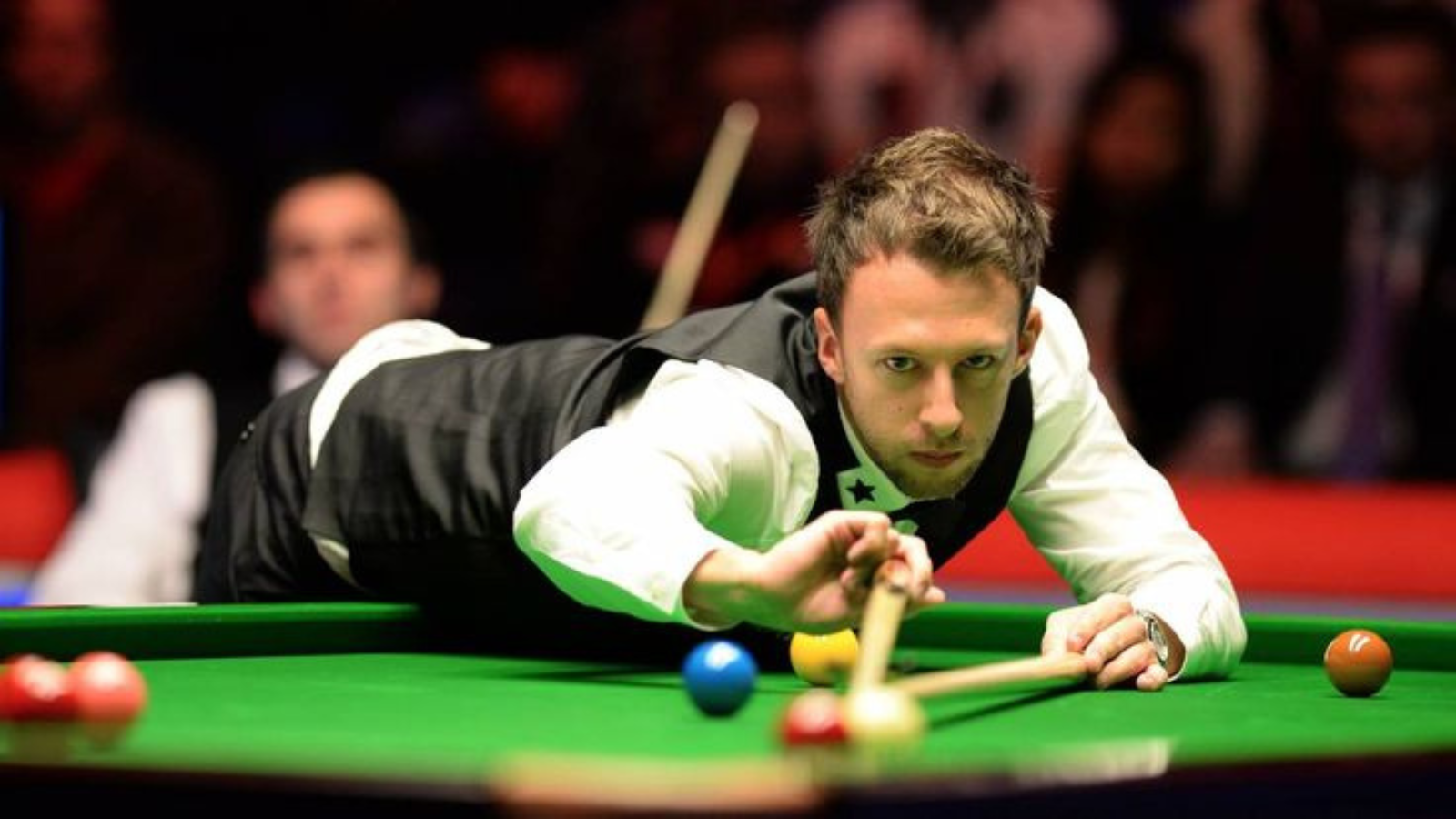

Higgins held his nerve in a tense decider against Judd Trump, while Gary Wilson’s dogged composure proved too much for Wu Yize, setting up a Masters final rich with storylines, contrasts and quiet drama.
Higgins And Trump Serve Up A Classic
John Higgins walked into his semi‑final with Judd Trump carrying both the weight of his legacy and the suspicion that his best days might be behind him. Trump, by contrast, brought the easy swagger of a modern superstar, the kind of player who can turn a match with one audacious pot and a shrug to the crowd. For much of the contest, those two versions of snooker collided: Trump playing with pace and imagination, Higgins tightening the screws with the positional play that has defined his career.
There were passages when Trump looked ready to sweep the match away, stringing together fluent breaks that had the arena buzzing and social feeds lighting up with short clips of his cue‑ball wizardry. Yet every time the match seemed to tilt decisively in his favor, Higgins found a way to slow the tempo, drag Trump into safety exchanges and turn the evening into a test of patience as much as potting. As the frames ticked past and the scoreline tightened, the dynamic shifted from showreel snooker to something more psychological, almost chess‑like in its intensity.
By the deciding frame, the atmosphere had shrunk to a kind of focused hush, the roar of earlier in the night replaced by the small, sharp reactions of a crowd that understood what was at stake. Higgins, who has rebuilt himself more than once over a long career, leaned on that experience, taking on no unnecessary risks, refusing to be rushed by the occasion or by Trump’s presence at the other end of the table. When the final balls disappeared and the handshake came, it felt less like an upset and more like a reminder that in snooker, timing and temperament can still neutralize youth and star power.
Wilson’s Grit Outlasts Wu’s Audacity
If Higgins versus Trump felt like a meeting between eras, Gary Wilson against Wu Yize had the intrigue of a generational audition. Wu arrived with a rising reputation, the kind of emerging talent seen as essential to snooker’s future, particularly as the sport pushes more deeply into Asian markets. His game has a looseness and flair that speaks to a new audience, one comfortable consuming matches in highlight form and drawn to big shots more than slow‑burn positional play.
Wilson, by contrast, has built his career on perseverance rather than spectacle. He has spent years hovering on the edge of major breakthroughs, often running into bigger names at the wrong time, often leaving tournaments with the nagging sense that the margins had gone against him. Against Wu, that history became fuel rather than baggage; from the first frame, Wilson played like a man determined to control the rhythm, using long, probing safety shots to deny Wu the kind of open tables where his natural attacking instincts thrive.
There were still flashes from the younger man, breaks that hinted at the ceiling of his talent and a willingness to take on shots that older players might refuse on principle. But over the course of the match, those moments were balanced by errors that Wilson was ruthless in punishing, turning half‑chances into frame‑winning visits. As Wu chased the game, Wilson’s composure became the story: no theatrical celebrations, no visible wrestling with the occasion, just the steady work of a player determined not to let another opportunity slip.
A Final Shaped By Contrasts
Taken together, these two semi‑finals have produced a Masters final rich with narrative tension. Higgins brings the weight of history and a style of snooker that feels almost classical, rooted in percentage play and a deep respect for the geometry of the table. Wilson arrives as the quieter figure, less decorated, more blue‑collar in his path to the big stage, but riding the momentum of a week in which he has repeatedly turned tight matches into statements.
The contrast runs deeper than resumes. Higgins is at a stage where every appearance in a major final invites questions about legacy: how many more of these runs are left, what another title would mean for his place among the greats. Wilson, meanwhile, is playing for something more immediate and perhaps more fragile: the right to be talked about in the same breath as the game’s established elite, the kind of validation that can change not just a ranking but a career’s entire trajectory.
From a viewer’s perspective, the match promises a kind of layered drama you cannot script in advance. There is the tactical intrigue of seeing whether Wilson can live with Higgins in safety exchanges, the emotional component of watching a veteran trying to hold off a hungry challenger, and the knowledge that in snooker, one bad mistake at the wrong moment can rewrite an entire tournament’s story. For a sport that lives on fine margins and long memories, it is exactly the kind of final that keeps fans talking long after the last ball is potted.
What This Run Means For Snooker
Beyond the individual storylines, this Masters run says something about where snooker finds itself in 2026. The sport is still powered by familiar names, yet increasingly defined by the tension between heritage and renewal, between the players who built its modern era and those emerging from new geographies and media landscapes. Seeing a field that can accommodate Higgins, Trump, Wilson and Wu in the same late‑stage bracket underscores a competitive depth that keeps broadcasters, sponsors and audiences engaged.
It also highlights how personality, poise and narrative remain as important as pure technique. Higgins’ calm under pressure, Trump’s box‑office swagger, Wilson’s quiet resilience and Wu’s fearless ambition all speak to different kinds of fandom, different ways viewers see themselves in the athletes they follow. As the sport continues to chase viewers across platforms and time zones, matches like these serve as ready‑made stories: short enough to clip, rich enough to sustain long‑form coverage, and unpredictable enough to feel genuinely live.
By the time Higgins and Wilson walk out for the final, the scorelines from their semi‑finals will already be fading, but the impressions they left will remain. One veteran, one challenger, both looking to turn a good week into something unforgettable, on one of the sport’s biggest stages. Snooker, a game often reduced to numbers on a scoreboard, is once again reminded that its most enduring currency is still human drama.