


For years, manufacturing teams have worked around the quiet inefficiencies of market research. They relied on outdated reports, sprawling spreadsheets, and scattered directories – waiting for analysts to piece together fragments from dozens of sources. The work eventually came together, but slowly, and often with gaps that influenced decisions long before they reached the factory floor or the sales office.
These delays were once considered unavoidable. But pressures on the industry have shifted. Supply chains are more fragile, customer needs move faster, and entire segments rise or decline within months.
Developed by Orderfox, Gieni AI analyzes industrial data from over 20 million companies to deliver real-time market intelligence.
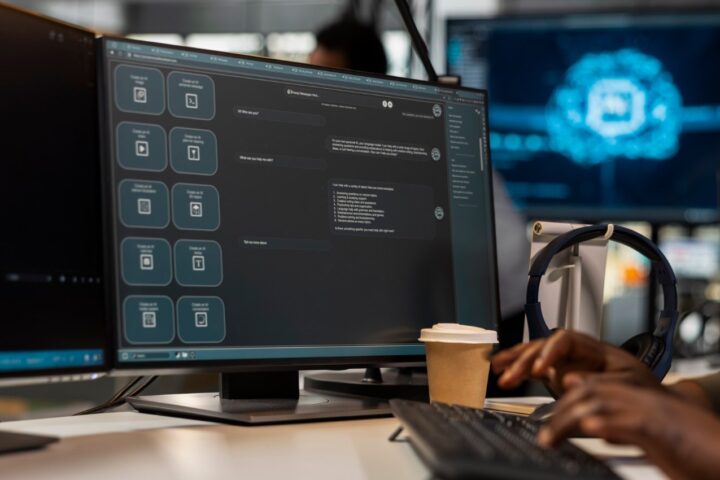
The integration of Gieni AI into Microsoft Copilot represents an attempt to address this long-standing gap. It places sector-specific intelligence directly inside the software many workers already use, turning a process that once required days or weeks into a matter of seconds.
A New Tempo for Industrial Research
With Gieni now accessible inside Copilot, a manufacturing team no longer depends on multi-step searches or aging directories. A person can enter a query — identifying electronics suppliers in Southeast Asia or emerging precision machining firms in Central Europe — and receive structured results immediately. These findings draw from a data foundation that includes more than 20 million company profiles and 380 million analyzed websites, according to Orderfox.
This is not a simple keyword search. Gieni’s agents are trained on the specific language of manufacturing. They recognize machinery classes, production methods, supplier tiers, and regional manufacturing clusters that general AI systems often misinterpret. Those distinctions matter, especially when minor terminology differences can alter the meaning of a query entirely.
The integration reduces the friction that has shaped early research for decades. Instead of spending time gathering basic information, teams can begin evaluating it – a shift that could influence the pace of commercial and operational planning.
How Teams Will Use It
Industrial sales teams often operate with limited visibility into unfamiliar regions. A salesperson preparing for a new market visit can now ask: “Show Tier 2 industrial automation suppliers in Northern Italy,” and Copilot will return a list of companies, comparative indicators, and geographic distribution. Previously, this required assembling data from multiple sources, sometimes with inconsistent results.
Procurement teams can use the integration to identify alternative suppliers during disruptions, particularly in sectors where capacity changes quickly. Strategy teams can run early scans of markets before deciding whether bigger research efforts are needed. They can assess competitors, capacity growth, and regional trends to guide partnerships or diversification strategies.
Although the tool provides faster access to information, it does not replace the due diligence required in manufacturing. On-site evaluations, audits, and regulatory checks remain essential. The integration simply shortens the distance between question and orientation, allowing decisions to begin with clearer context.
“Users can ask detailed market questions directly within their Microsoft workspace and receive results supported by industrial data,” said Timur Göreci, Chief Revenue Officer at Orderfox.
The Stakes of Better Information
Manufacturing decisions carry weight. A misread market can affect hiring plans. A misunderstood supplier capability can slow production. A missed technology trend can alter investment cycles. The accuracy and timing of information influence outcomes far beyond spreadsheets or dashboards.
This is why faster, more structured intelligence matters. It does not eliminate risk, but it narrows the space where preventable mistakes occur. When teams move from partial information to informed analysis, the consequences ripple outward through budgets, supply chains, and the lives of workers who depend on stable operations.
“Teams can gain the context they need earlier in the process and move forward with greater clarity,” said Derek Tanner, Chief Executive Officer at Orderfox.
A Turning Point for an Information-Heavy Industry
Manufacturing is often imagined as physical, mechanical, grounded in materials and production lines. But beneath the machinery is an industry shaped by information – who produces what, where capacity is shifting, which regions are accelerating, and which technologies are taking root.
As more manufacturing systems become data-connected, integrations like this will define how industrial knowledge flows across global networks.
Gieni’s integration into Microsoft Copilot reflects this reality. It signals that industrial knowledge should not lag behind the pace of change. It suggests a future where teams retrieve insight in the same moment they need it.
The rhythm of industrial research is changing. Weeks are becoming seconds. And for an industry that depends on timely understanding, that shift is less a revolution than a long-overdue correction.