
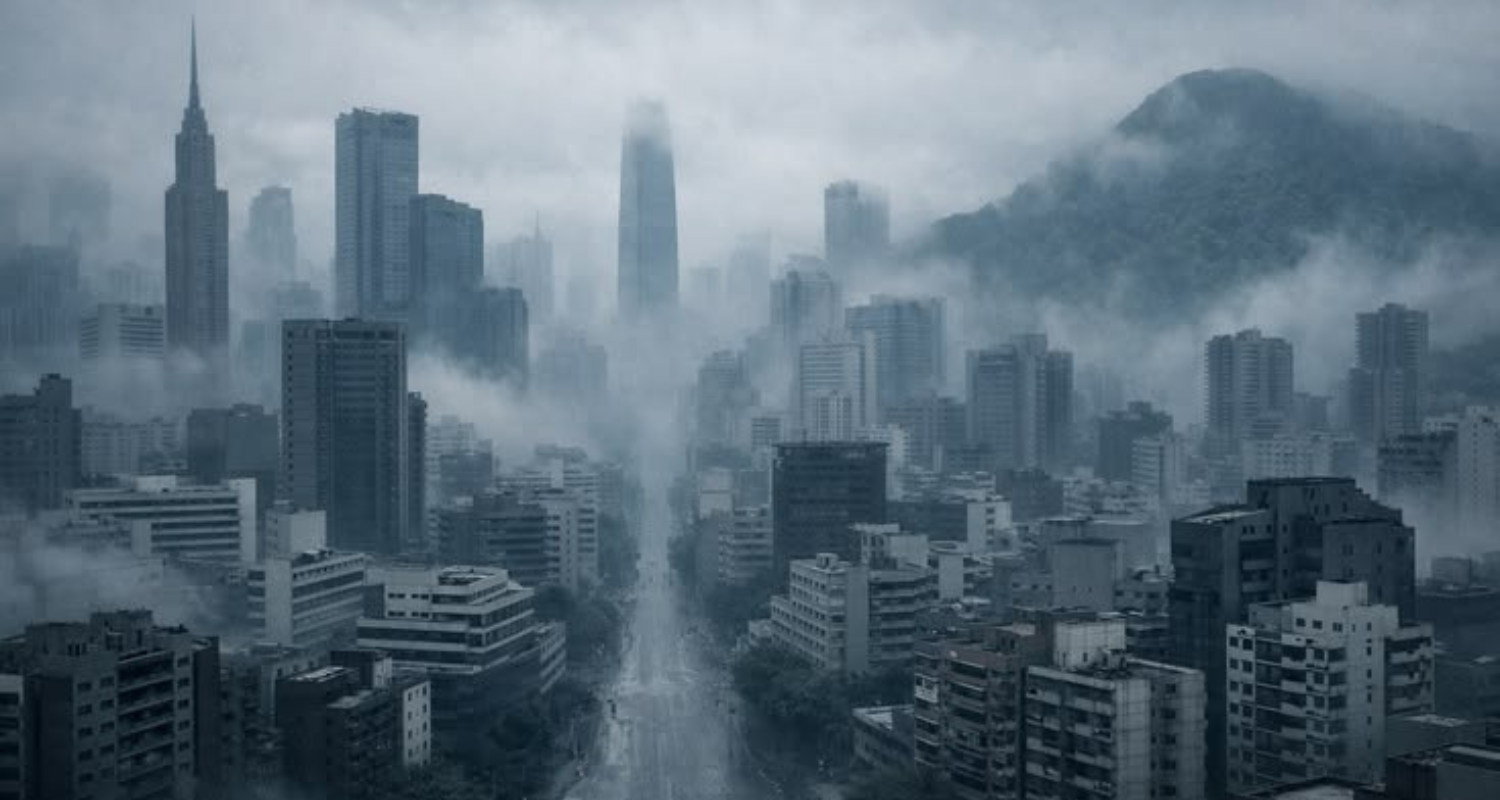

Derek Zhao did not set out to make a statement about architecture, solitude, or the strange moods of a city at dawn. He simply noticed what was happening outside: a familiar tower, usually crisp against the skyline, had been swallowed by fog until it seemed less like a building than an enormous, unplaceable object rising from another world.
Taken on a phone during a moment of shifting weather, Zhao’s image transforms an ordinary urban view into something cinematic. The tower’s hard lines are softened by mist, its upper reaches fading into a pale, uncertain sky. What remains is a stark vertical shape, isolated and powerful, that invites the viewer to pause and imagine what lies beyond the frame.
A Familiar Skyline Becomes Unrecognisable
Cities are often photographed for their energy, their traffic, their crowds and their illuminated windows. Zhao’s picture finds its power in the opposite direction. The fog removes detail instead of adding it, stripping the scene back until the tower becomes the only visual anchor in a nearly empty landscape.
That reduction gives the image its emotional force. Without the usual clutter of signage, neighbouring buildings and movement below, the structure appears monumental. It no longer feels tied to a particular street or district. It becomes a silhouette suspended in the weather, a form that could belong to almost any city and, at the same time, nowhere at all.
The photograph also speaks to the way weather can reshape our relationship with places we think we know. A building that might normally be passed without notice suddenly becomes mysterious when its scale is interrupted by clouds. In Zhao’s image, fog is not simply a backdrop. It is the element that changes the story.
The Stillness of a Fleeting Morning
There is a quiet patience in the photograph, as though the scene had to be discovered rather than arranged. Fog rarely stays in one position for long. It drifts, thickens, opens and disappears, often changing the composition of a view within minutes. Capturing that kind of atmosphere requires attention to timing as much as technique.
Phone photography is especially suited to such unexpected encounters. The best camera is often the one already in hand, and Zhao’s image demonstrates how quickly a passing moment can become a lasting visual record. There is no sense of excessive staging or manipulation. The frame feels immediate, almost accidental in the best possible way.
That spontaneity makes the picture relatable. Most people have seen fog alter a street, a bridge or a familiar building, but few stop long enough to notice the transformation. Zhao’s photograph encourages that pause. It shows that visual drama does not always require a distant destination or an elaborate shoot. Sometimes it appears outside the window on an ordinary day.
A Phone Camera’s Distinctive Advantage
The image also challenges outdated assumptions about what phone photography can achieve. Technical equipment matters in many forms of photography, but atmosphere cannot be purchased. A large camera may offer greater control, yet a phone offers a different kind of creative advantage: immediacy.
For photographers working in cities, that immediacy can be decisive. Light reflects off glass for only a few seconds. Rain changes the colour of pavement before traffic washes it away. Fog can reduce a skyline to shadow and then reveal it again before a camera bag has even been opened. A phone makes it easier to respond to those shifts without turning the experience into a complicated production.
Zhao’s photograph succeeds because it does not try to prove what a phone can do through technical excess. Instead, it relies on composition, contrast and mood. The tower occupies the image with a firm presence, while the fog gives it space to breathe. The result is a picture that feels composed but not forced, polished but still close to the moment in which it was made.
Finding Grandeur in Everyday Scenes
What makes the image memorable is its ability to make an everyday structure feel almost mythic. Towers are symbols of certainty: built from steel, concrete and glass, designed to stand above their surroundings. Yet in Zhao’s picture, the fog makes that certainty fragile. The building appears to emerge from nothing, and its full height remains unknown.
That tension gives the photograph its narrative quality. It is not merely an image of a tower in bad weather. It is an image about scale, isolation and perception. The mist conceals enough information for the viewer to become involved, filling the blank space with questions about what the scene looked like before the fog arrived and what it became once the air cleared.
In an era when countless images compete for attention, Zhao’s photograph stands out by doing less. It does not depend on spectacle, colour or a recognizable landmark. Its strength lies in restraint. By seeing a temporary weather event as an opportunity rather than an inconvenience, he turned a quiet morning view into an evocative study of the city at its most mysterious.