

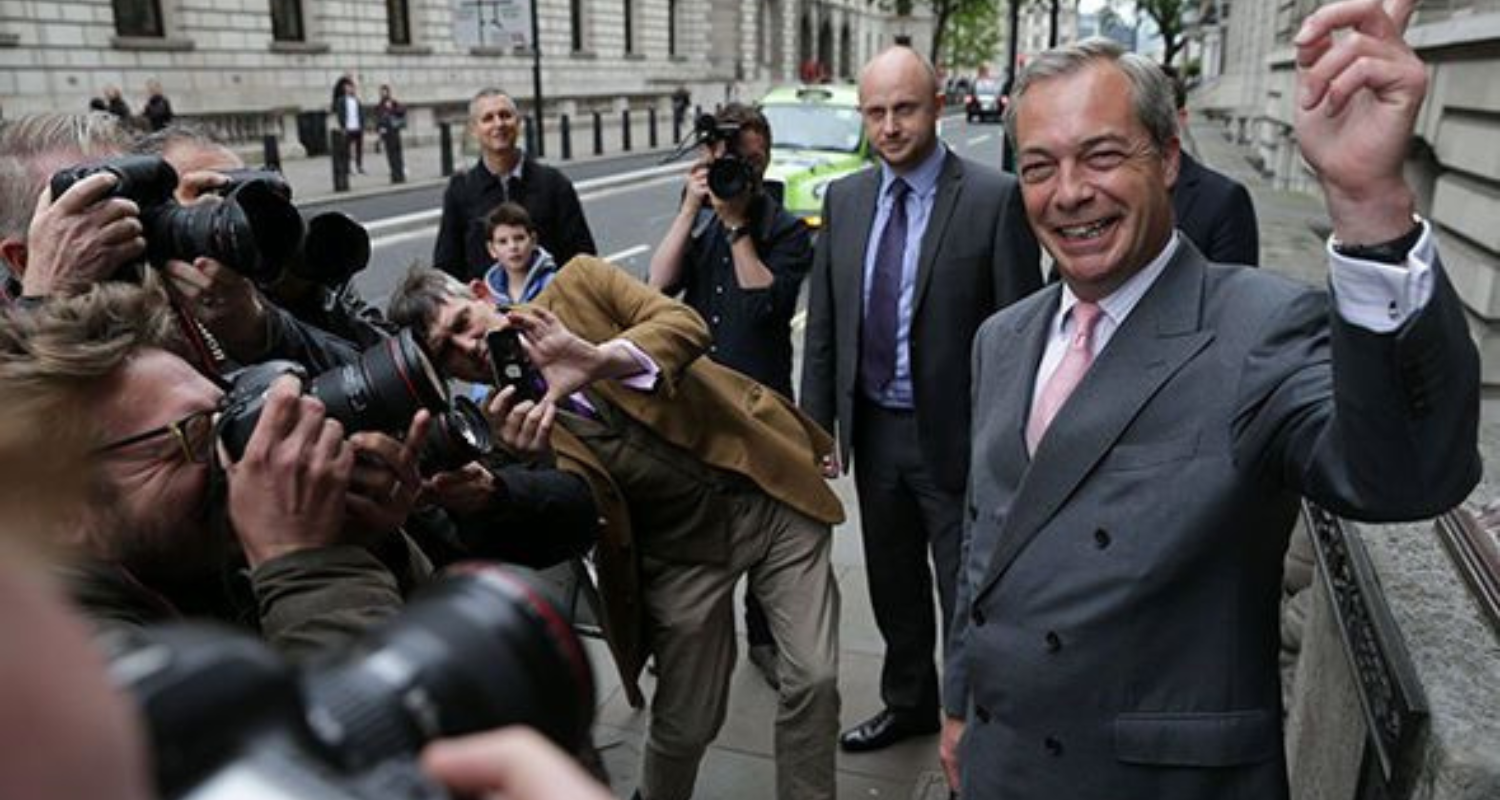

The dining room was calm enough to make the subject matter feel almost improbable. Beyond the polished glasses and careful service, the conversation moved toward one of the most divisive figures in British politics and the campaign that returned him to Westminster after years spent pressing at its gates.
Nigel Farage’s successful bid for the Clacton seat in 2024 was described by critics as theatrical, disruptive and, in some corners, unnecessary. To others, it was the culmination of a political career built on challenging the assumptions of Britain’s mainstream parties. Over lunch, the question surfaced plainly: was Clacton a serious electoral mission or a personal project designed to place Farage at the centre of the national debate once again?
The answer came without hesitation. “He suggested the Clacton byelection was a vanity project,” one voice recalled of the criticism. “Obviously I disagree.” The exchange captured a broader divide that continues to define British political life: whether bold, personality-driven campaigning is a legitimate way to represent public frustration, or simply a spectacle that places the individual above the constituency.
A Seat With Symbolic Weight
Clacton had long carried political significance beyond its size. The Essex coastal constituency became a focal point during the Brexit years, reflecting the concerns of voters who felt increasingly disconnected from Westminster’s language, priorities and institutions. Its politics were shaped not only by national arguments over sovereignty and immigration, but also by local anxieties surrounding public services, jobs and economic opportunity.
For Farage, the seat was a natural arena. His political identity had been forged around the claim that millions of voters were being overlooked by parties that spoke confidently about progress while failing to acknowledge the pressures felt in towns and communities outside major urban centres. Clacton offered a constituency where that message had resonance, but it also presented a demanding test of whether his appeal could translate into sustained parliamentary representation.
Critics saw his arrival as calculated. They argued that his decision to stand was less about the practical responsibilities of constituency work and more about restoring his influence over Britain’s political agenda. Yet that reading risks oversimplifying the relationship between a high-profile candidate and the voters who choose to back him. A political figure may bring national attention, but an electorate still decides whether the message reflects its own experience.
The Case Against the Vanity Label
The phrase “vanity project” is often deployed when political ambition appears unusually personal. It suggests that a candidate is motivated primarily by visibility, legacy or ego rather than public service. In Farage’s case, the charge carried particular force because he had already become one of Britain’s most recognisable political voices without holding a seat in the House of Commons.
But supporters argue that visibility itself is not evidence of insincerity. Farage’s career has been marked by a willingness to pursue causes that were once dismissed as marginal. His role in the Brexit movement made him a polarising figure, yet it also demonstrated how rapidly a movement can shift from the political fringe to the centre of national decision-making when it connects with public sentiment.
The more persuasive question is not whether the campaign raised Farage’s profile. It clearly did. The question is whether it addressed issues that voters believed had been neglected. From that perspective, the campaign was not an exercise in personal reinvention but a continuation of an argument that has defined British politics for more than a decade: who is heard, who is represented and who benefits when national policy is made.
The Theatre and Reality of Modern Politics
Politics has always involved performance. Campaign launches, televised debates, newspaper columns and doorstep interviews are all part of the modern contest for attention. What has changed is the speed with which a candidate’s every gesture can be interpreted as either authenticity or manipulation.
Farage understands the value of direct communication. His public style is informal, provocative and deliberately distinct from the measured language of conventional party leadership. For admirers, this is a strength. They see a politician who speaks plainly and refuses to smooth over disagreements for the sake of appearing acceptable. For opponents, it is precisely what makes him difficult, as sharp rhetoric can deepen division even when it captures genuine discontent.
The lunch-table exchange revealed the limits of easy labels. Calling a campaign a vanity project may provide a neat political criticism, but it does not fully explain why voters respond to it. Electoral success is not created by personality alone. It requires a message, a moment and a constituency willing to believe that the candidate understands concerns others have failed to address.
Beyond One Campaign
The significance of Clacton extends well beyond a single constituency or a single politician. It reflects the unsettled state of British electoral politics, where traditional party loyalties have weakened and voters are increasingly willing to reconsider where they place their trust. A candidate once regarded as an outsider can become central to the public conversation if established institutions appear detached from everyday experience.
That does not mean the critics were wrong to scrutinise the motives behind the campaign. Political ambition deserves scrutiny, especially when it is accompanied by celebrity, controversy and significant media attention. Yet scrutiny should leave room for a more complicated conclusion: a campaign can advance a politician’s career while also giving voice to a constituency’s frustrations.
Over a quiet meal, the debate surrounding Clacton became a reminder that politics is rarely settled by one interpretation. To dismiss the campaign as vanity is to overlook the voters who saw purpose in it. To treat it solely as a popular uprising is to ignore the careful strategy behind it. The truth, as ever, may lie somewhere between the personal ambition of the candidate and the political appetite of the people who put their faith in him.