

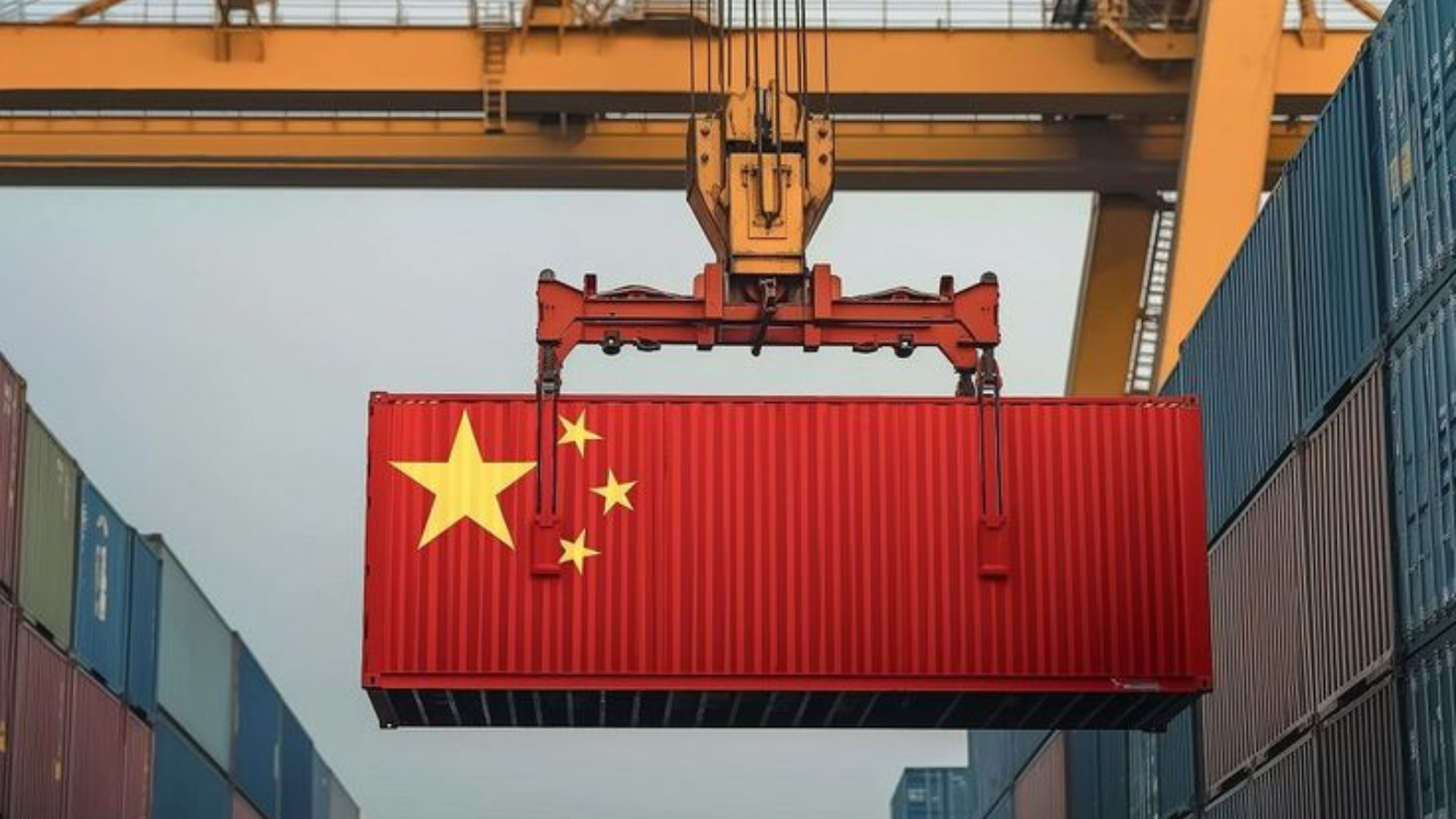

bbFor decades, China stood at the center of the world’s manufacturing map, its coastal provinces humming with export-driven energy. Today, that map is being redrawn. Trade tensions, rising labor costs, and geopolitical recalibrations have prompted a subtle yet significant rerouting of supply chains both within and beyond China’s borders.
Factories that once exclusively supplied Western markets are now diversifying their production bases, with some operations moving inland while others extend into neighboring countries such as Vietnam and Indonesia. Yet this is not a story of retreat. Instead, China is reconfiguring its role, shifting from a volume-driven export machine to a more complex, strategically distributed network that still anchors global production.
At the same time, multinational corporations are adopting a “China plus one” strategy, hedging against disruptions by maintaining operations in China while building capacity elsewhere. This dual-track approach reflects a new era of risk management in global trade, where resilience often outweighs efficiency.
Inland Expansion and Industrial Upgrading
While coastal manufacturing hubs like Shenzhen and Guangzhou continue to thrive, inland cities are emerging as new industrial strongholds. Provinces such as Sichuan, Henan, and Chongqing are attracting investment with lower labor costs and government-backed infrastructure incentives. High-speed rail networks and logistics corridors have made these regions increasingly viable for large-scale production.
This inland shift is not merely about cost savings. It represents a broader push toward industrial upgrading. China is investing heavily in automation, artificial intelligence, and advanced manufacturing technologies, enabling factories to produce higher-value goods with greater efficiency. As a result, the country is moving up the value chain, focusing less on low-cost assembly and more on innovation-driven output.
Local governments play a critical role in this transition, offering subsidies and policy support to attract both domestic and foreign enterprises. The result is a more geographically balanced industrial landscape that reduces dependency on any single region while enhancing overall supply chain resilience.
Southeast Asia and the Extended Supply Web
Beyond China’s borders, Southeast Asia has become an integral part of the evolving supply chain ecosystem. Countries like Vietnam, Thailand, and Malaysia are absorbing segments of production that were once concentrated in China, particularly in labor-intensive industries such as textiles and electronics assembly.
However, these shifts do not signal a complete decoupling. Instead, they illustrate the emergence of a more interconnected regional network. Components may be manufactured in China, assembled in Vietnam, and exported globally, creating a multilayered supply chain that spans multiple jurisdictions.
Chinese companies themselves are driving much of this expansion, investing heavily in overseas manufacturing facilities to maintain competitiveness and market access. This outward investment underscores a strategic adaptation rather than a loss of influence, as China continues to shape the broader architecture of global trade.
Navigating Uncertainty in a Fragmented World
The rerouting of supply chains is occurring against a backdrop of heightened geopolitical uncertainty. Trade disputes, regulatory changes, and shifting alliances have made predictability increasingly elusive for businesses operating across borders. In response, companies are prioritizing flexibility, building redundancies into their supply networks to mitigate potential disruptions.
Technology is playing a pivotal role in this transformation. Digital supply chain management tools, real-time data analytics, and predictive modeling are enabling companies to respond more quickly to changes in demand and policy environments. These innovations are not only improving efficiency but also providing a level of transparency that was previously difficult to achieve.
Yet challenges remain. Infrastructure gaps in emerging manufacturing hubs, regulatory complexities, and varying labor standards continue to pose risks. For China, the task is to balance its domestic transformation with its role in an increasingly decentralized global system. For multinational firms, the challenge lies in navigating this evolving landscape without sacrificing competitiveness.
As global trade enters a new phase, China’s rerouted supply chains offer a glimpse into the future of manufacturing. It is a future defined less by a single dominant hub and more by a dynamic, interconnected network that reflects the complexities of a rapidly changing world.