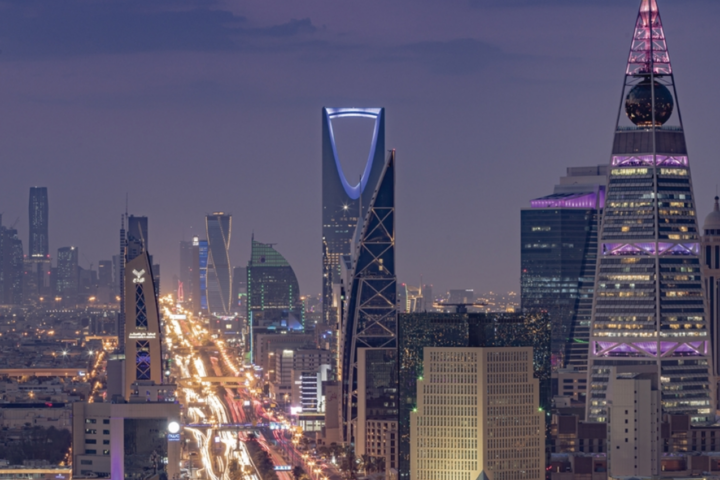
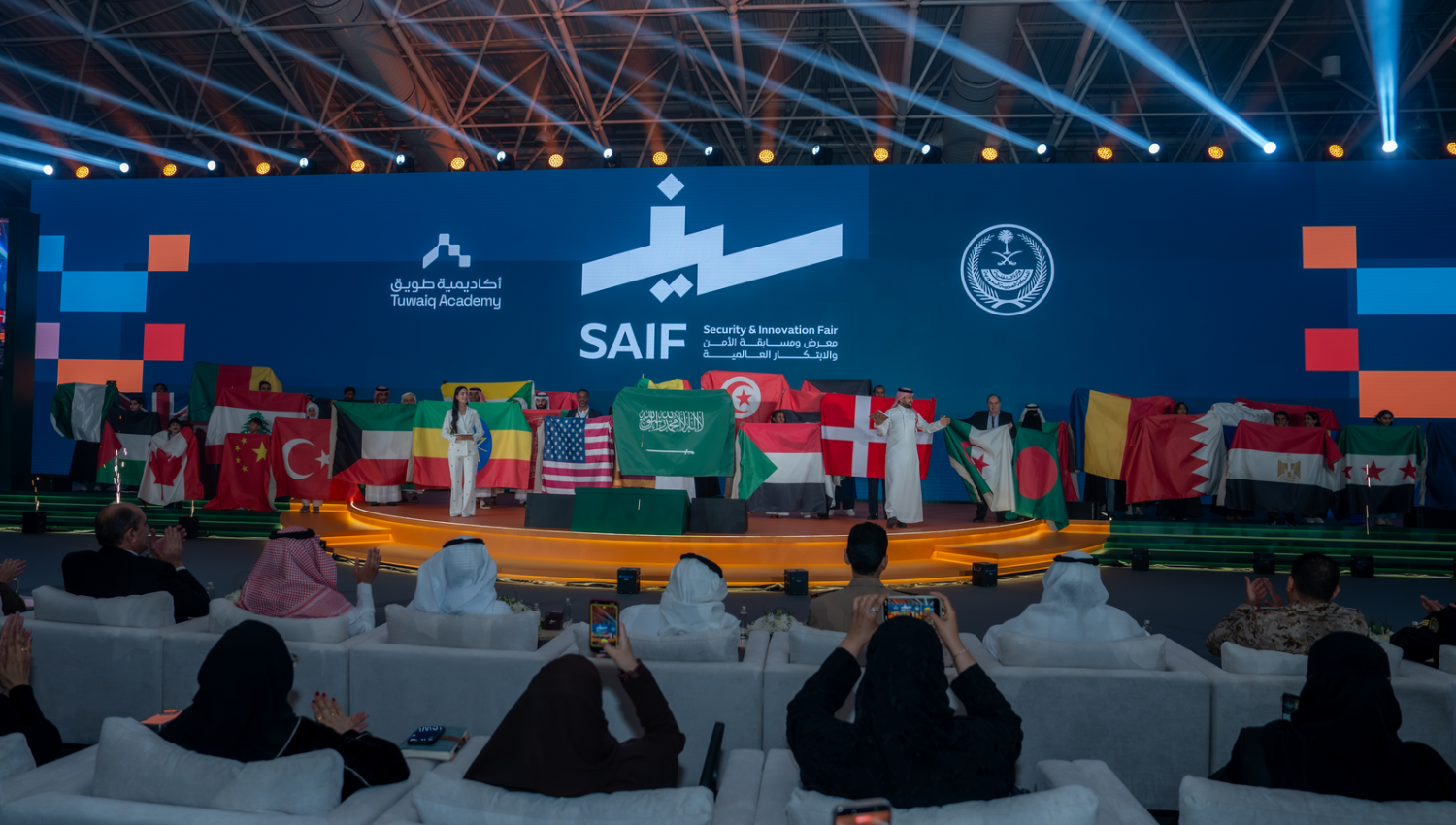
Over 3,000 people from 55 countries have brought 1,200 projects to Riyadh for the SAIF International Security and Innovation Exhibition and Competition, which opened on Monday and runs until Nov. 26.
It sits within the Global Security & Technology Summit. Entries cover AI, cybersecurity, space, aviation and health technology, and the programme includes workshops and interactive exhibits alongside the competition.
Organisers had not expected the response they got. Speaking at the opening, Abdulaziz Alhammadi, who runs Tuwaiq Academy as CEO and is vice chairman of the organising committee for the summit, said the team had planned for modest numbers but quickly received over 120,000 registrations covering more than 30,000 projects.
Monday’s opening also began the final round of judging. More than 300 judges have spent upwards of 50,000 hours in total reviewing entries over several months.
Alhammadi said the international turnout stood out most. Global contests typically start with five to seven countries, he noted. “This first edition has attracted 55 countries,” he said.
Students, researchers and entrepreneurs fill the exhibition floor. A group of high school students from Saudi Arabia is applying AI to a gap in environmental data across the MENA region. Using image inpainting, a method that rebuilds missing parts of an image, their project produces fuller maps of carbon dioxide levels in the region.
Team member Yousef Tariq Tatwani, a Grade 12 student at Riyadh Najed Schools, said warming in the MENA region is running two to three times faster, adding that it is among the least observed parts of the world. A problem has to be located before it can be dealt with, he said, and the tool could help researchers and policymakers pinpoint emission hotspots more precisely.
Nearby, three Saudi sisters are showing EchoShield, a prototype platform built to protect oil and gas sites from cyberattacks, fires, hazardous leaks and other threats. The system draws on sensors that track temperature, pressure and gas levels, and uses AI to spot unusual readings and warn operators before a situation gets worse.
Rana Shabib Alfowaires, a Grade 12 student at Future Vision Private School, said conventional security systems may be slow to catch all of these threats. Her sister Rital Shabib Alfowaires said the concept started as a classroom project and was developed further with advice from their father, who works as an engineer at Aramco.
Competition judge Aiyoub Aldhalea said the strongest projects are not always the most complicated. A distinctive solution, and how easily it can be carried out in a given market, rank among the qualities winning entries share, he said.
Alhammadi urged participants to treat SAIF as a place to work together and swap ideas across borders, rather than only a contest. He told competitors that any idea they shared could be where a solution for the world begins, and that the connections they make may prove the most lasting reward.
Tahakom, Elm, the International Federation of Inventors’ Association and the Ministry of Education are among the event’s partners.
Based on reporting by Ghadi Joudah for Arab News, November 24, 2026, with additional reporting by Ruby Alseikhan.