
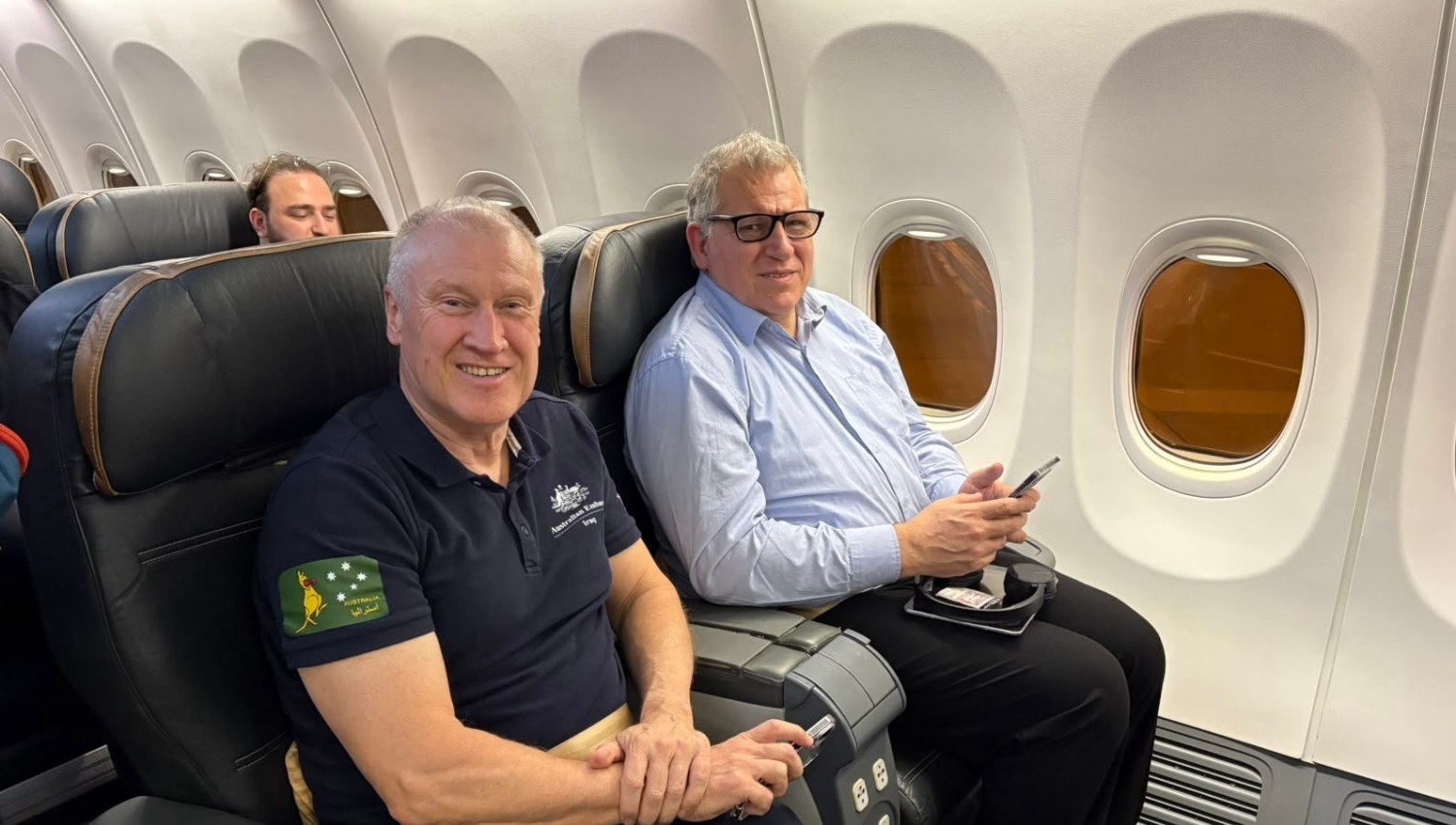
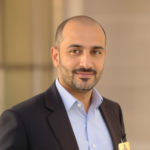
Robert Pether, a 50-year-old Australian engineer who lived in Dubai, has left Iraq after five years and is travelling to rejoin his family in Ireland. His wife, Desree, told The National he was due to arrive at about 9.25am local time.
Pether was freed from a Baghdad prison in June 2025 but was unable to leave Iraq because of financial claims connected to his case. Since his release he had stayed with friends or in hotels, with the family covering his food and accommodation. He and his Egyptian colleague Khaled Radwan, also a Dubai resident, were arrested at what they believed was a routine business meeting. Both were jailed in August 2021, sentenced to five years and ordered to pay $12 million. Radwan has also left Iraq.
The case grew out of a $33 million contract awarded in 2015 to CME, the firm Pether worked for, to build the Central Bank of Iraq’s headquarters near the Tigris River. Work stopped in 2016 as oil prices fell and Iraq fought ISIS, and resumed in 2018. CME worked 39 of the 48 contracted months and was paid for 32 before payments stopped. The central bank later asked for a three-month extension to make up for work halted during the Covid-19 pandemic. In 2023 the International Chamber of Commerce’s International Court of Arbitration found the central bank at fault in the dispute.
International bodies had pressed for his release. In 2022 the UN Working Group on Arbitrary Detention described his detention as arbitrary and contrary to international law. The office of the US Special Presidential Envoy for Hostage Affairs called for his release in 2025, after Australian Foreign Minister Penny Wong urged his return home. In June 2026 the UN human rights office called his situation particularly alarming, citing his declining health, a lack of specialist medical care and the psychological strain of prolonged detention.
Wong said Australia welcomed Iraq’s decision to let him leave. She said she spoke to Pether shortly before he departed Baghdad and was “pleased he is now free to move forward with his life”. She thanked Australian officials and the Irish authorities for their work, and the Australian government has said it recognises the major impact the detention had on Pether and his family and will continue to provide them with consular support.