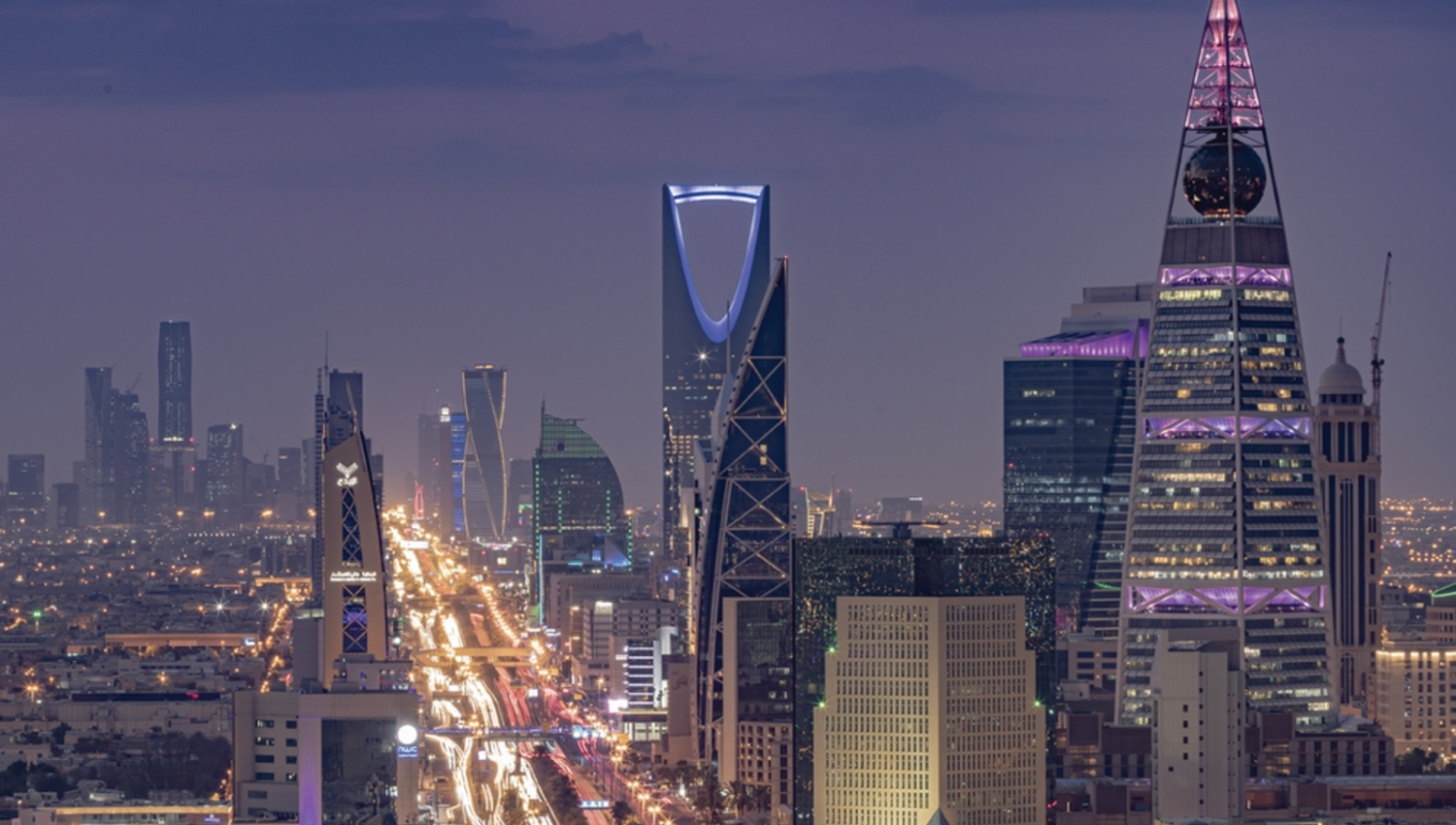
Riyadh now ranks 54th in Kearney’s Global Cities Index for 2026, a climb of 16 places since 2022 that continues the Saudi capital’s steady move up the table.
The city gained two places on its 2025 position and scored better on four of the index’s five dimensions. In Kearney’s separate Global Cities Outlook, which measures how much potential a city has for the future, Dammam moved up 18 places in a year to 64th, the largest gain of any Middle East city. Better scores in innovation and economics drove its rise.
The results add to other recent signs of Riyadh’s pull as an international business centre. In September, for the first time, Riyadh made the top 50 of Oxford Economics’ Global Cities Index, jumping 47 places, and came fourth worldwide for human capital. More than 700 international companies have now joined the Kingdom’s Regional Headquarters Program, beyond the program’s 2030 goal of 500.
Kearney Foresight Middle East and Africa’s executive director, Valentin Lavaill, said in comments to Arab News that the country’s broader economic overhaul under Vision 2030 is lifting its cities. The Kearney report pointed to spending on international schools and education capacity, saying Riyadh shows what deliberate policy can achieve.
Lavaill said real non-oil activity expanded by about 34% between 2021 and 2025, evidence that the economy has become both more diverse and stronger. Since 2020, the five Saudi cities in the assessment have improved their average scores on four dimensions, with cultural experience up 204 percent, information exchange up 120 percent and human capital up 56 percent.
He said education gives people the skills a changing economy demands and new industries give them somewhere to use those skills, and that this helps cities hold on to and draw in talent, investors and businesses while widening their economic base.
Among Saudi cities, Makkah made the biggest annual gain on the index, moving up six places. Jeddah fell two places to 85th even though it improved on three dimensions.
Dammam’s outlook result rested on a 34-place gain in economics and a 91-place leap in innovation. Lavaill said the city went from 142nd to 51st on innovation this year, mainly because of strong expected patent output. He cited the biotechnology startup program at Dammam Valley and patent and entrepreneurship support led by universities as moves that could push industrialisation forward and raise the share of the non-oil economy coming from smaller businesses. In 2025, according to the report, foreign direct investment into Dammam increased, whereas Riyadh and Jeddah slipped back despite sharing the same broad national conditions.
Looking ahead, Lavaill said Jeddah and Dammam gain from their international trade links and Riyadh is becoming a base for companies and governments. “The opportunity is to convert these strengths into broader global influence,” he said. He added that Saudi cities could build their standing in the global AI race by putting money into digital infrastructure such as data centers, and that each city can chart its own route toward challenging the established names that have long held the top 30 of the index.
Based on reporting by Donia Diaaeddine for Arab News, November 25, 2026.