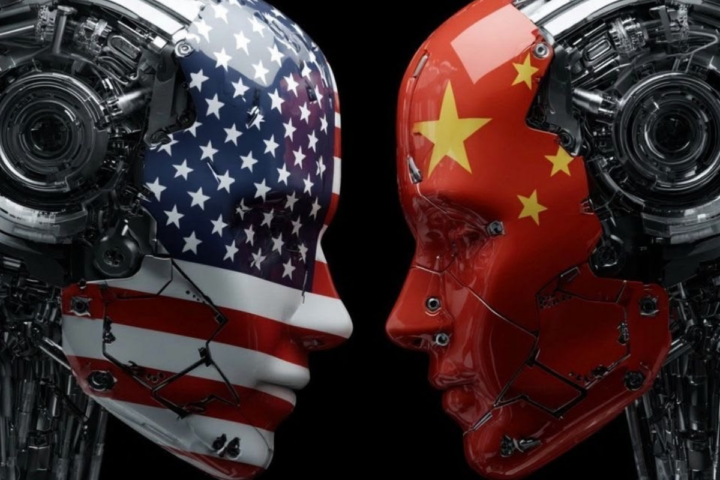



For much of America’s artificial intelligence boom, attention has followed the biggest models and the companies building them. Each release has brought another round of questions about capability, competition and whether Washington should intervene. Beneath that familiar debate, however, a different contest is gathering momentum: whether businesses will merely buy access to powerful intelligence or gain greater control over the systems themselves.
A growing American open-model industry is challenging the notion that the country’s AI choices must revolve around proprietary platforms or Chinese alternatives. Its supporters argue that customizable, domestically developed models could give businesses another route into the technology, while complicating the political arguments surrounding innovation and oversight. At the center of that shift is a deceptively simple idea: ownership.
A Different Kind of American AI Ambition
The distinction can seem technical until a company decides how to use AI. A business accessing a proprietary model through a provider’s service operates within that provider’s commercial and technical boundaries. An openly available model can offer more room to adapt the technology and choose where it runs. That flexibility is central to the case now being advanced by American open-model developers and their supporters.
Michael Frank, chief executive of geopolitical risk analysis platform Radiant Intel, described the appetite for a domestic alternative in an interview with the Daily Caller News Foundation. His argument reaches beyond national competition. As businesses explore AI agents capable of carrying out tasks, he sees customization and configuration becoming increasingly important. In that view, the decisive question is not simply which model leads a benchmark, but which system a business can shape around its work.
The terminology deserves care. Reporting and industry conversations sometimes group “open-source” and “open-weight” models together, even though those labels should not automatically be treated as interchangeable. For buyers, the practical issue is what a particular release actually permits: access, modification, deployment and continued use. The promise of openness is meaningful only when the available permissions match the organization’s needs.
From Renting Intelligence to Running It
Reflection, an Nvidia-backed startup, has become one of the companies drawing attention to this alternative. Its open-weight model, Beam, entered the conversation with ambitions to compete with leading proprietary systems and Chinese open models. Those ambitions are not proof of superiority, but they illustrate how American AI competition is expanding beyond the familiar race between subscription-based assistants.
Reflection chief executive Misha Laskin has framed the appeal in terms of moving from renting intelligence toward owning it. The underlying proposition is attractive to organizations that expect AI to become part of their operating infrastructure: greater control over a model could offer more continuity and flexibility than depending entirely on a service controlled elsewhere. Reflection has presented customization and lower costs as central goals of its open ecosystem.
That pitch also changes how performance is discussed. Lauren Gil, a Tokenomics Foundation governing board member and cofounder of Kimchi Coding, argued that routine coding work does not necessarily require the most expensive frontier model. The implication is less dramatic than a single breakthrough, but potentially important: useful AI adoption may depend on matching the system to the task rather than purchasing maximum capability for every request.
The Enterprise Stakes Behind Openness
For corporate users, the debate becomes especially tangible around sensitive information. Gil pointed to the appeal of running an American open-weight model on dedicated hardware, in an isolated environment or within a cloud deployment the company controls. Such arrangements offer an alternative for organizations reluctant to send valuable intellectual property or source code through an outside AI service.
Those possibilities should not be mistaken for automatic guarantees. Control over deployment and confidence in security are related, but they are not the same claim. Likewise, a model promoted as inexpensive does not establish that every organization will save money by adopting it. The strongest enterprise case for openness is therefore not a universal promise of cheaper, safer AI. It is the opportunity to evaluate a different operating arrangement.
The emerging ecosystem also extends beyond a single developer. Reporting on the sector identifies Nvidia’s Nemotron work and Together AI’s platform for running and adapting open-weight models as parts of the broader landscape. Together, such efforts suggest that the commercial opportunity includes not just creating models, but helping businesses deploy and manage them.
Washington Faces a More Complicated Choice
The political implications follow directly from that expanding market. Frank argues that treating proprietary American laboratories as the country’s indispensable AI champions risks encouraging regulation that protects their position. That is an industry participant’s argument, not a settled conclusion, but it raises a consequential question: how can policymakers pursue safety without assuming that today’s dominant business models must remain dominant?
Open-model advocates have also found encouragement in Washington. At a Black Hat conference panel with Laskin, White House National Cyber Director Sean Cairncross described open source as vital to the ecosystem and expressed interest in making American offerings globally competitive. His comments underscore that openness is becoming part of the national competitiveness discussion, rather than merely a preference among developers.
America’s AI debate is consequently widening. The next chapter will not be defined only by which company produces the most capable system. It will also turn on who can adapt that intelligence, where it operates and how much independence its users retain. For businesses watching the market, that may be the more lasting development: an emerging contest over the terms on which AI becomes part of everyday economic life