

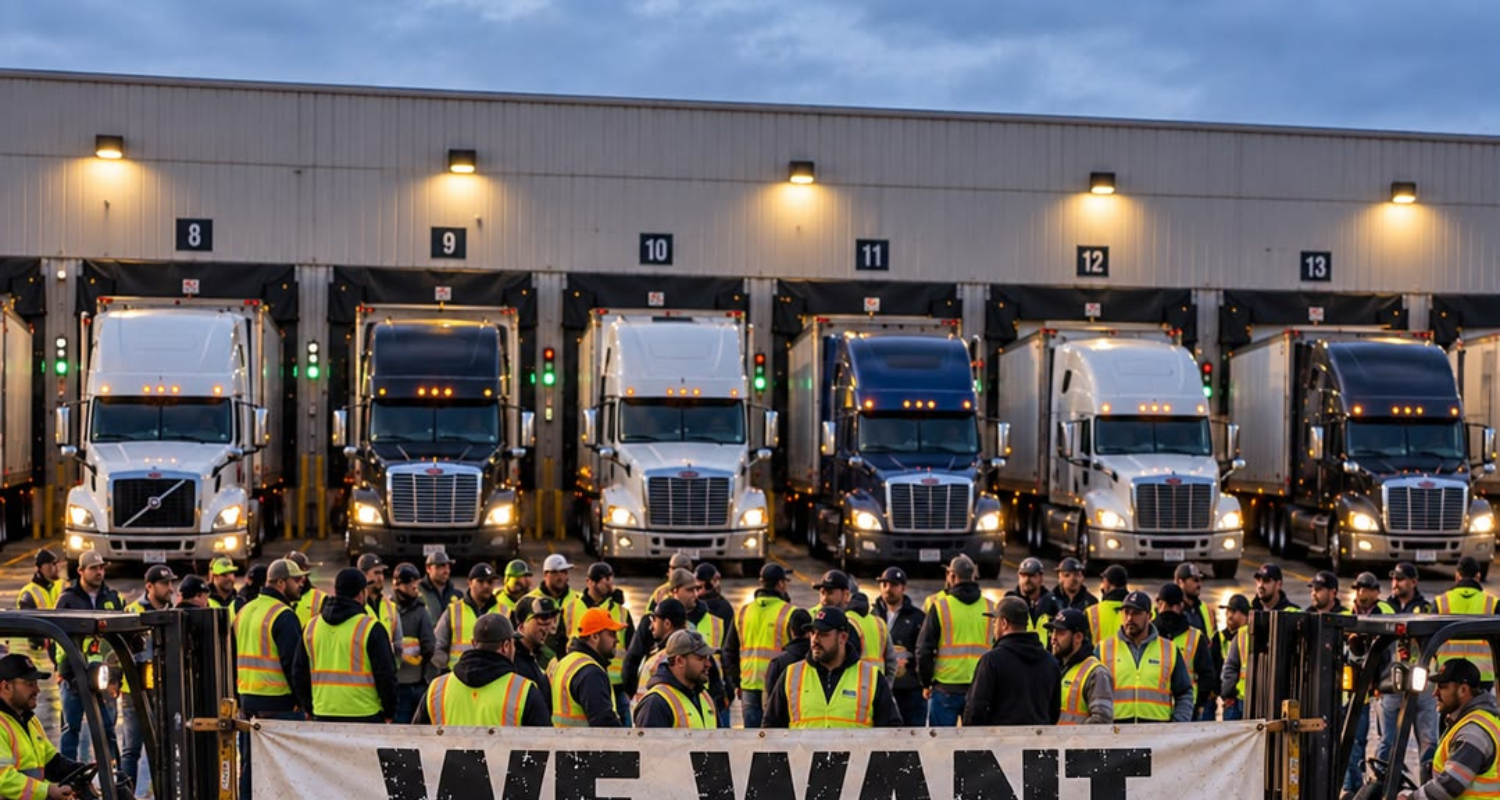

For a trucking company, the next delivery begins with an unavoidable purchase. Before a driver can collect a shipment or make up time on the interstate, the truck needs diesel. With fuel prices hovering above $6 a gallon in October, that routine expense has become a test of whether another trip makes financial sense. FleetOwner reported a national average of $6.179 in the latest federal weekly survey, more than $2.50 above the year-earlier level.
The pressure is showing up beyond truck-stop receipts. Newsweek reported that at least eight large trucking businesses sought Chapter 11 bankruptcy protection in September, including Xoco Transport and Globemaster. Those filings describe an industry confronting several financial problems at once, with expensive fuel arriving alongside existing debt and other operating pressures. Bankruptcy documents reviewed by the publication did not uniformly identify diesel as the direct cause.
That distinction matters. The story is not simply that higher pump prices suddenly destroyed otherwise healthy companies. For carriers already struggling to make their numbers work, the diesel surge has intensified a broader squeeze. Soft freight rates, equipment loans and insurance premiums leave less room to absorb a cost increase that must be paid before the next shipment earns its return.
When Every Mile Demands More Cash
The size of the increase becomes clearer when measured across a truck’s working year. An analysis published by Yahoo Finance illustrated the burden using a tractor traveling 100,000 miles annually at 6.5 miles per gallon. Under those assumptions, a $2.49 increase in diesel adds roughly $38,000 to annual fuel spending for one truck. The illustration is not a universal fleet budget, but it shows how quickly a price change becomes a substantial business expense.
Multiply that exposure across dozens of vehicles, and an operator faces a problem much larger than an uncomfortable fill-up. The same analysis estimated that a 40-truck fleet could confront more than $1.5 million in additional annual fuel costs under those conditions. Keeping vehicles moving can therefore require significantly more cash even when the company is performing the same amount of work.
Fuel surcharges are intended to help carriers recover some of that expense, but protection is uneven. Contract adjustments can trail changes at the pump, while smaller operators taking spot-market loads may lack a separate surcharge provision. The timing creates a difficult mismatch: diesel must be purchased now, while payment for hauling the freight comes later. A business can remain busy while finding itself increasingly short of the money needed to operate.
Behind the Filings, Different Financial Stories
The bankruptcy cases reveal why a single explanation cannot capture every carrier’s position. Texas-based Xoco Transport reported a $609,000 net loss for the first seven months of 2026, according to Newsweek. Its reported liabilities of $3.3 million exceeded assets of $2.2 million. Those figures point to financial difficulties extending beyond the price displayed at any individual fuel stop.
Globemaster, a carrier based in Bolingbrook, Illinois, filed for Chapter 11 on September 15 and elected the small-business Subchapter V process, according to reporting carried by Yahoo Finance. Its case also illustrates how financing and access to working cash become central when a trucking company enters court protection. Customer receivables may represent money earned, but spending cash collateral can require court authorization.
For a carrier, that legal detail has an immediate operational consequence. Money owed for completed deliveries does not automatically translate into unrestricted funds for the next tank of diesel. The bankruptcy process and the daily demands of running trucks can therefore intersect at the most basic level: paying the expenses required to keep hauling. The challenge is not only how much the company owes, but whether it can fund tomorrow’s work.
Relief at the Pump May Arrive Too Slowly
There are signs that prices could ease, although the outlook offers little immediate comfort. In its October forecast, the U.S. Energy Information Administration expected retail diesel to remain above $6 a gallon during the month before gradually declining. The agency projected an average of about $4.50 a gallon in 2027, making clear that the anticipated improvement would unfold over time rather than arrive as an overnight reset.
That gap between eventual relief and immediate obligations is the heart of the problem. Equipment financing, insurance and fuel purchases remain part of the operating equation while companies wait for better conditions. A forecast of cheaper diesel cannot itself supply the cash needed for a load leaving today. For financially stretched carriers, the timing of recovery may matter as much as its eventual size.
The consequences also reach beyond trucking-company balance sheets. Diesel costs can feed into road and rail freight charges across a broad range of goods, connecting the industry’s financial strain to suppliers and their customers. Yet for the businesses confronting bankruptcy, the immediate question is narrower: whether enough money remains to keep trucks moving until conditions improve. America’s freight still needs to travel. Increasingly, the difficult calculation is who can afford to carry it.