
Across factory floors, project sites, sales operations, and corporate offices, the most consequential business decisions often begin with a simple question: Do employees have the clarity, capability, and support required to perform at their best?
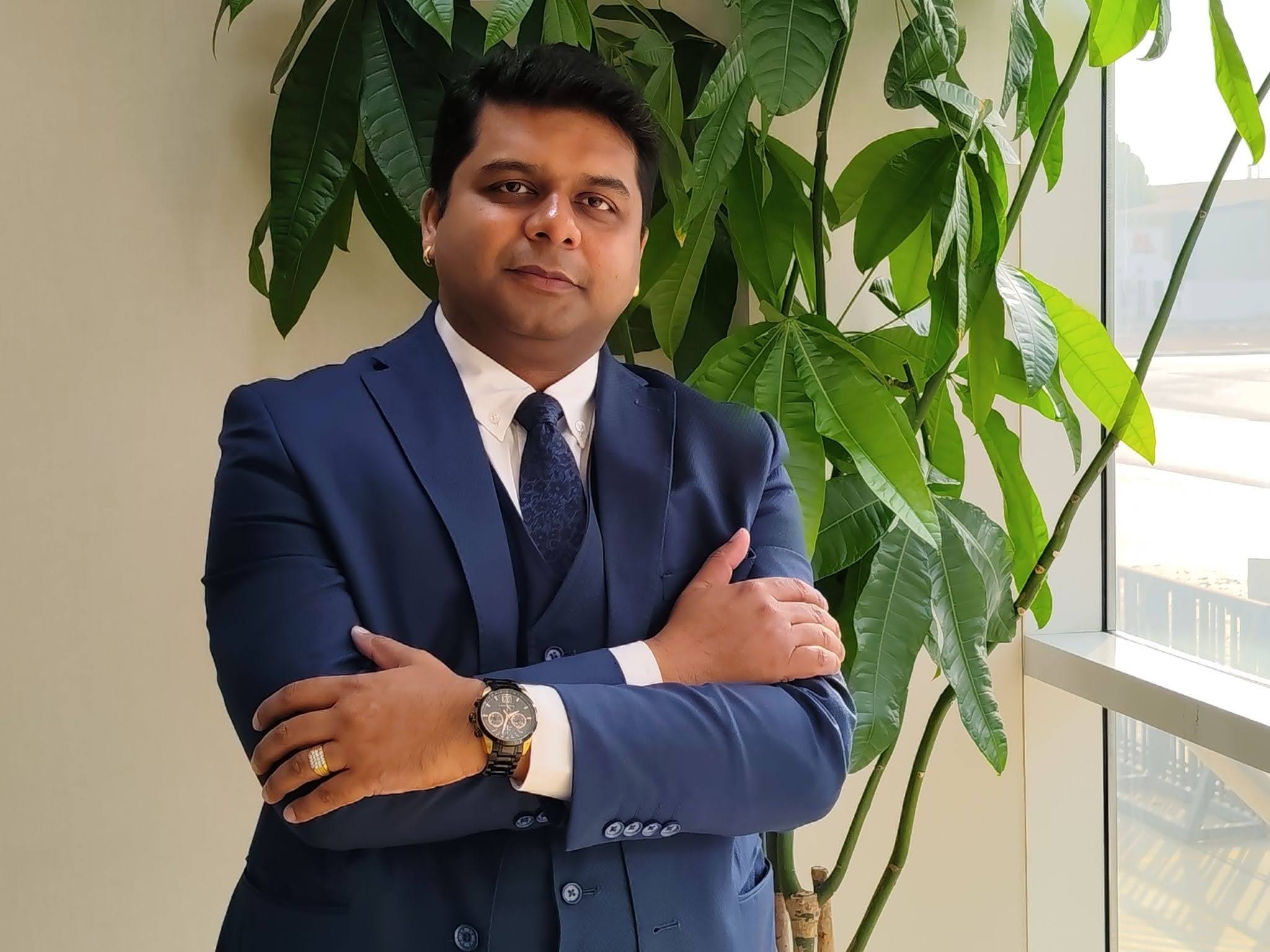
For Dr. Manish Pratap Singh Chandel, this question has shaped nearly two decades of leadership across manufacturing, engineering, industrial services, and corporate organizations. As Head – Human Resources at Fabtech International Ltd., JAFZA, Dubai, UAE, he champions a business philosophy that positions human resources not as an administrative function, but as a strategic partner responsible for enabling sustainable growth, operational excellence, and organizational resilience.
Operating within one of the Middle East’s leading heavy engineering and industrial fabrication companies, Chandel’s current role spans workforce strategy, organizational development, leadership capability, talent management, employee relations, governance, and business transformation. Working closely with executive leadership, he focuses on aligning workforce decisions with commercial objectives, ensuring that people strategies directly support productivity, profitability, compliance, and long-term competitiveness.
Throughout his career, Chandel has consistently approached workforce management through a commercial lens. His leadership has contributed to measurable business outcomes, including improved EBITDA, higher workforce productivity, optimized operating costs, enhanced leadership capabilities, and stronger retention of high-potential talent. Rather than treating these achievements as isolated HR successes, he views them as indicators of stronger organizational capability, disciplined execution, and more effective business decision-making.
This philosophy recognizes that modern organizations constantly balance competing priorities. Production targets demand speed, customers expect quality, financial performance requires cost discipline, and employees seek meaningful development and career progression. Sustainable performance is achieved when these priorities reinforce one another rather than compete. Chandel has addressed these challenges by strengthening workforce planning, clarifying accountability, building leadership capability, and integrating human resources more closely with business operations.
Bringing Operational Excellence to Workforce Strategy
Working within industrial environments has reinforced Chandel’s belief that the same disciplines used to improve manufacturing performance can also strengthen people management. Throughout his career, he has incorporated methodologies such as 5S, Kaizen, Total Productive Maintenance (TPM), Total Quality Management (TQM), Lean Manufacturing, competency frameworks, and skills matrices into organizational development initiatives.
Rather than viewing these methodologies solely as production tools, he has applied their underlying principles to workforce planning, capability development, succession planning, and performance management. Structured processes help organizations identify capability gaps, standardize expectations, reduce ambiguity, and create greater consistency in leadership decisions. In complex organizations where operational reliability depends on thousands of daily decisions, clarity often becomes a competitive advantage.
Performance management has remained a central element of this philosophy. During earlier assignments at ACC Limited, Chandel contributed to developing a performance management framework that integrated measurable business objectives with behavioral expectations and organizational values. By balancing quantitative targets with leadership behaviors, managers were able to evaluate performance more comprehensively while providing employees with clearer guidance on how individual contributions supported broader business objectives.
The same approach has informed his work across sales and customer-facing organizations, where workforce planning, leadership development, talent management, and incentive alignment were designed to strengthen commercial performance while creating meaningful opportunities for employee growth. The underlying principle is straightforward: sustainable business performance depends on employees who understand expectations, possess the required capabilities, and believe that consistent performance creates opportunities for advancement.
Leadership Beyond Human Resources
As Head – Human Resources at Fabtech International Ltd., Chandel’s responsibilities extend well beyond traditional HR operations; his role encompasses organizational transformation, workforce planning, industrial relations, employee experience, leadership development, change management, governance, and strategic business partnering across a dynamic industrial environment serving global energy, infrastructure, and engineering sectors.
Much of his leadership has involved situations where operational priorities, regulatory obligations, and employee expectations intersect. These responsibilities have included workforce mobilization, organizational restructuring, senior leadership hiring, industrial relations, employee engagement, and organizational culture initiatives. Such situations rarely have straightforward solutions, requiring leaders to balance commercial realities with fairness, transparency, and long-term organizational interests.
His experience across India and the United Arab Emirates has enabled him to work closely with executive teams, boards, government authorities, operational leaders, and multicultural workforces. In these environments, effective leadership depends not only on technical expertise but also on careful listening, evidence-based decision-making, and consistent communication that builds credibility across diverse stakeholder groups.
Governance as a Foundation for Sustainable Growth
Within today’s increasingly regulated business environment, governance has become inseparable from business performance. Chandel has consistently viewed compliance not as an isolated HR responsibility but as an essential component of operational excellence and long-term organizational sustainability.
The foundations of this philosophy were established in his early career, in one of India’s most respected manufacturing organizations, where his professional approach to governance, operational discipline, and people leadership was shaped. He often credits ACC with instilling the principles that continue to guide his leadership today, building systems that emphasize integrity, accountability, process excellence, and sustainable business performance. That experience laid the foundation for his belief that strong governance is not merely about adhering to regulations, but about embedding discipline, transparency, and trust into everyday business operations.
Today, as Head – Human Resources at Fabtech International Ltd., JAFZA, Dubai, UAE, Chandel applies these principles within a complex industrial environment, supporting business continuity while aligning workforce practices with evolving regulatory and commercial requirements. His expertise spans Indian Labor Laws, UAE Labor Law, the Wage Protection System (WPS), Free Zone employment regulations, Emiratisation, industrial relations, workforce governance, and organizational compliance frameworks. This cross-jurisdictional experience enables him to navigate diverse legal and operational environments while ensuring that people practices support both regulatory compliance and strategic business objectives.
For Chandel, governance extends beyond statutory compliance. Clear policies, transparent communication, consistent decision-making, and equitable application of workplace standards strengthen organizational trust, reduce operational risk, and create an environment in which employees, leaders, customers, and stakeholders can have confidence in the organization’s integrity.
Building Organizations That Can Sustain Performance
Beyond operational systems and compliance frameworks, Chandel’s academic background in counseling psychology, social psychology, human rights, and labor relations informs his broader perspective on leadership. He believes that high-performing organizations are built not simply through processes or technology but through cultures in which accountability, inclusion, respect, and continuous learning reinforce business objectives.
This perspective has guided initiatives in leadership development, employee engagement, organizational capability, diversity, equity, inclusion, and belonging, and succession planning. Rather than treating these as standalone HR programs, he views them as strategic investments that strengthen organizational resilience and long-term business performance.
As industrial organizations continue to navigate digital transformation, automation, changing workforce expectations, and increasingly complex global markets, the relationship between people strategy and commercial success will continue to grow stronger. Chandel’s leadership reflects this evolving reality—one in which human resources serves not merely as a support function, but as a strategic business partner that helps organizations improve performance, strengthen governance, develop leadership capability, and build workplaces where operational excellence and employee success advance together.
His work illustrates a broader principle increasingly recognized by forward-looking organizations: sustainable business performance is achieved when workforce strategy is fully integrated with business strategy, creating value not only for shareholders, but also for employees, customers, and the communities they serve.