

JEDDAH: For most people, the human eye is simply a feature of the face. For Saudi photographer Ashraf Habib, it is a canvas of extraordinary beauty.
“The Gate of Sights” exhibition, which concluded on Saturday at the Galleria Center in Jeddah, was dedicated to iris photography and grew out of the vision of Habib, founder of the “Qurrat Ain” platform. He has devoted the project to documenting and photographing the iris as a kind of visual signature, offering a creative experience that blends artistic craft with advanced technology and stands as one of the region’s rare, specialised initiatives.
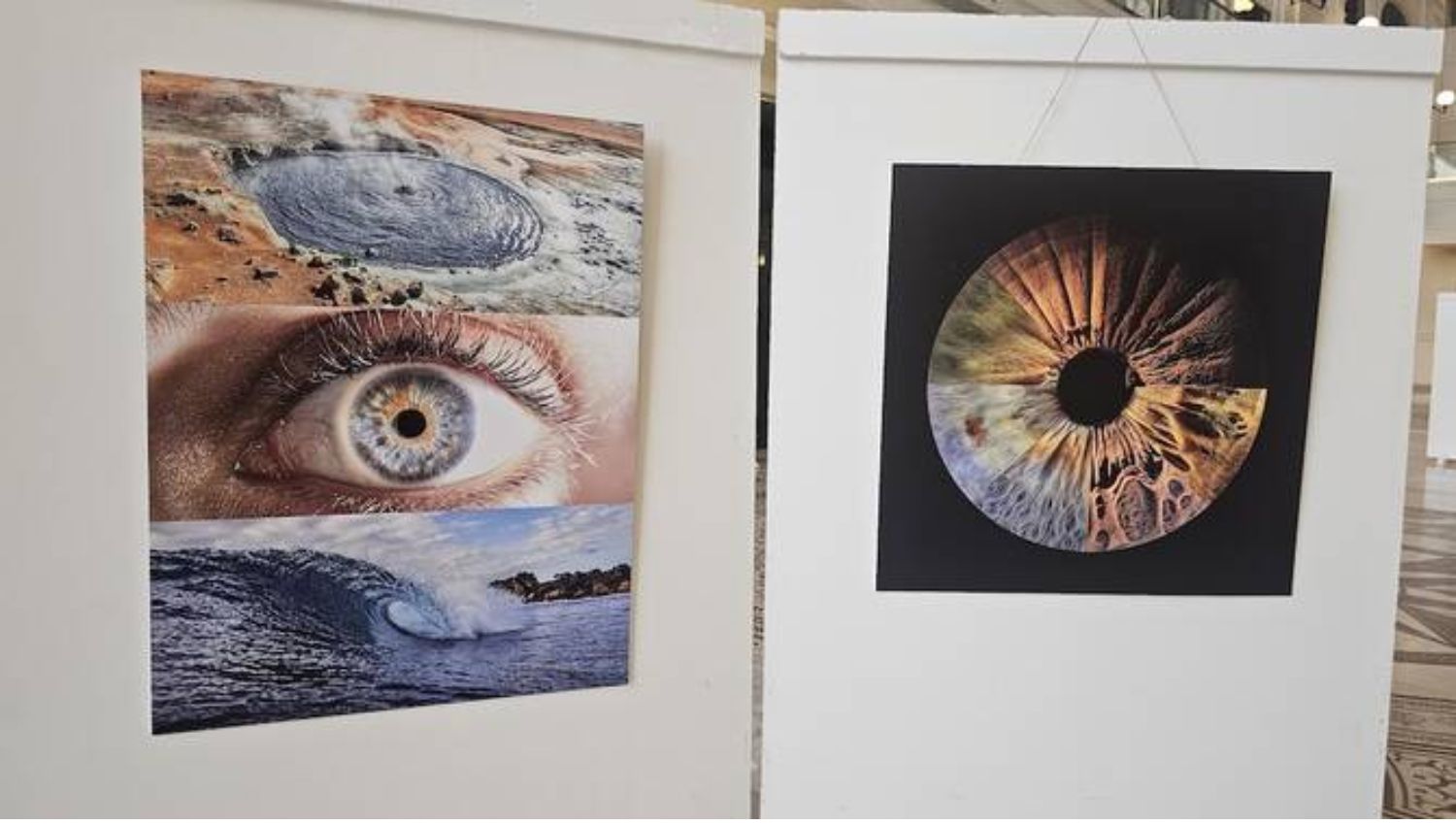
Habib’s images reveal the intricate patterns, vibrant colours, and remarkable details hidden within every eye, turning each iris into a distinctive work of art. The 20 photographs displayed throughout the Galleria highlighted the structures of individual eyes, producing scenes that pair scientific precision with visual beauty. The idea was to photograph the irises of real people, and over the course of three years Habib captured roughly 12,000 of them.
Habib, who specialises in photogrammetry, told Arab News that the project began with a suggestion from a friend. “A friend told me that iris photography, the macro art of capturing the intricate details and patterns of the human eye, is highly popular all over the world and there are many dedicated studios. He asked me to do an exhibition here at home,” he said. “I liked the idea and started studying this unique art. After three years here, we are holding my first personal iris photography exhibition. I love taking these high-detail, mind-blowing pictures of people’s iris. I also like how challenging it is, how technical and difficult it can get.”
Each eye, he explained, is entirely its own. “When you capture a person’s eye, each one is unique. A normal eye may appear black from the outside, but with different cameras and micro lenses, we reveal intricate details inside. It’s truly fascinating to see the complexity of our iris up close.” He added: “Everybody’s eye is different. Our eyes are more unique than our fingerprints. Especially when we get this close, we can see all of the detail, all of the different colorations. People think their eyes are one color, but it’s rare that there’s actually just one color in there.”
The exhibition featured large-format iris portraits showcasing an astonishing range of colours, textures, and naturally occurring patterns. Among the most striking were enlarged images that seemed to transform into scenes from nature. Some resembled the vibrant petals of a sunflower radiating from its centre, while others evoked the fiery crater of a volcano or the swirling motion of ocean waves. “They are highlighting how the human eye can mirror some of nature’s most breathtaking forms,” Habib said.
Visitors often spent several minutes examining an image before realising they were looking at a human eye rather than a digitally created artwork. Many chose to have their own irises photographed, turning the exhibition into an interactive experience that blended art, science, and personal identity.
For Habib, the show carried a simple message: extraordinary beauty does not always lie in distant landscapes or famous landmarks. Sometimes it exists within the human eye itself.