
The widening conflict involving Iran has introduced fresh security risks for the Gulf’s rapidly expanding artificial intelligence sector, drawing renewed attention to the resilience of the region’s data infrastructure and to the United States’ strategy of strengthening AI partnerships across the Middle East.
Iranian drone strikes in March reportedly damaged two Amazon Web Services data centres in the United Arab Emirates and disrupted another facility in Bahrain, briefly interrupting banking and cloud-based services. Investment activity has largely held steady, but the incidents laid bare how vulnerable critical AI infrastructure becomes as geopolitical tensions rise. Later that month, Iran’s Islamic Revolutionary Guard Corps declared US technology companies and facilities operating in the Gulf to be legitimate military targets, a warning that landed just as Washington deepens its AI collaboration with Gulf states through strategic investment deals designed to bolster regional capabilities while reducing reliance on Chinese suppliers.
A Deepening US-Gulf Alignment
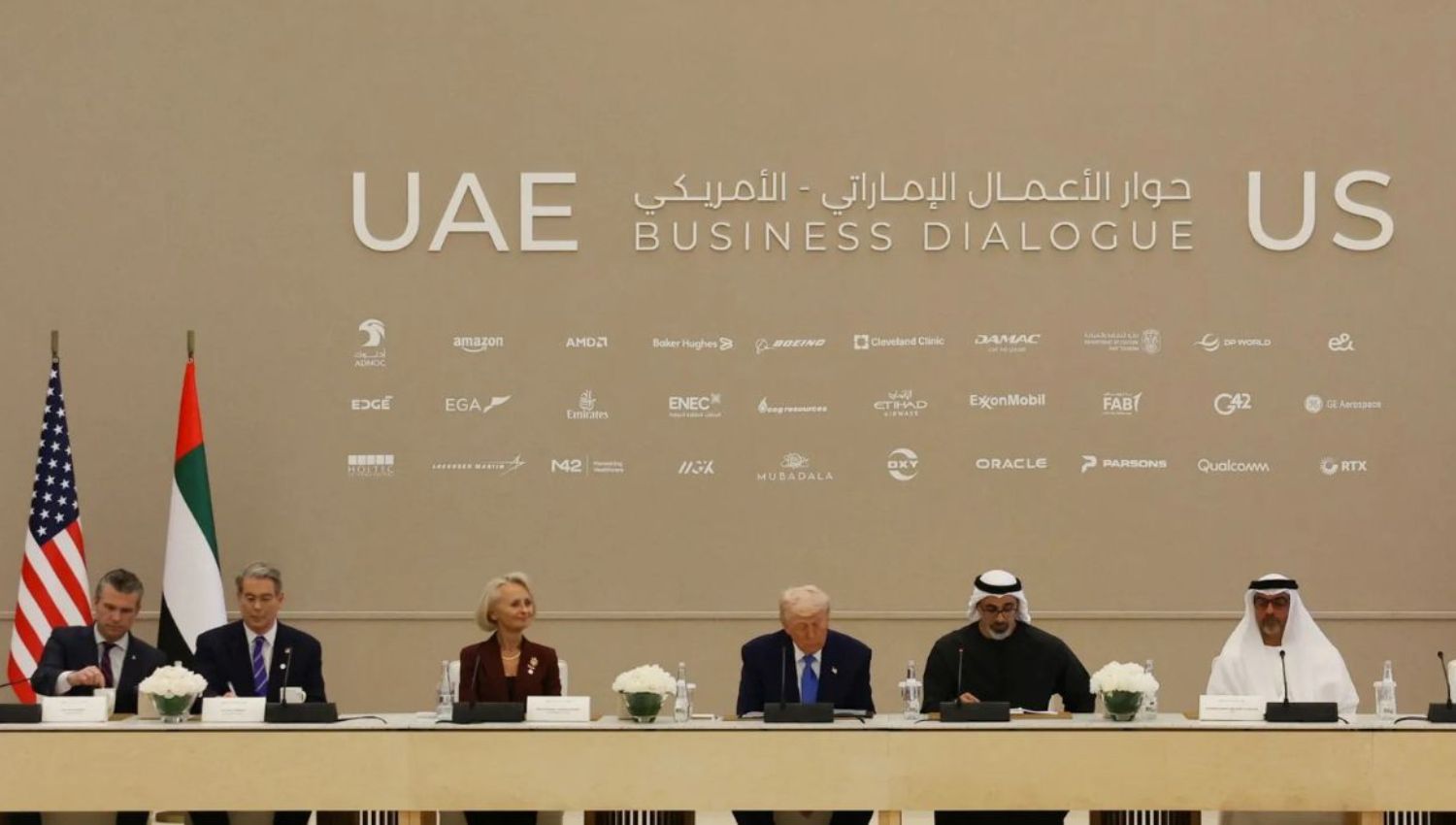
In May 2025, President Donald Trump signed a major AI cooperation agreement with the UAE as part of broader investment commitments exceeding $200 billion, an initiative intended to position the United States as the country’s preferred AI partner. A similar strategic partnership with Saudi Arabia followed, drawing on the Kingdom’s $100 billion Alat technology fund to accelerate AI development.
The agreements carry weight well beyond commerce. Washington has pushed Gulf countries to align with US technology ecosystems by limiting the use of Chinese AI products, including those made by Huawei. As part of that shift, Abu Dhabi-based AI firm G42 scaled back its ties with Chinese companies to secure broader access to advanced US chips. The strategic significance of Gulf data centres has grown further still after the US acknowledged deploying AI technologies, including Anthropic’s Claude and Palantir’s Maven systems, to support decision-making during the Iran conflict, placing regional digital infrastructure under even closer scrutiny.
Why the Gulf Remains a Magnet for AI Investment
Industry experts say surging global demand for AI computing capacity continues to make the Gulf an attractive destination for hyperscale data centre projects. Mike Sexton, senior policy adviser for AI at the Washington think tank Third Way, argues that expanding economic ties with Gulf nations gives them incentives to favour US technology companies over Chinese alternatives.
Abundant capital and relatively low energy costs have added to the region’s appeal. June Park, senior research affiliate at the Centre for Digital Law at Singapore Management University, noted that countries such as the UAE see artificial intelligence as a critical pillar of economic diversification beyond hydrocarbons.
Access to advanced AI hardware, however, remains tightly governed by US export controls. Washington requires Middle Eastern governments to guarantee that cutting-edge chips will not be passed on to Chinese entities before approving exports. The UAE has reinforced its alignment with US standards by joining the State Department’s Pax Silica initiative, which allows approved organisations and companies such as G42 to acquire advanced processors from Nvidia and AMD without seeking individual export licences. Saudi Arabia’s state-backed AI company HUMAIN has likewise been cleared to import advanced US chips, provided it meets strict security and reporting requirements.
A Careful Balancing Act With Beijing
Despite closer cooperation with Washington, analysts believe Gulf nations are unlikely to sever technology ties with China altogether. Many continue to balance relationships with multiple global providers as part of a wider strategy of economic and strategic diversification.
G42 illustrates the point. Its financial backing from Abu Dhabi’s sovereign wealth fund Mubadala, which maintains substantial investments in China and takes part in joint UAE-China initiatives supporting infrastructure and advanced technology, reflects that dual approach. Experts describe it as pragmatic hedging, letting Gulf countries strengthen partnerships with the United States while preserving valuable commercial links with Beijing.
The competition between US and Chinese AI is intensifying regardless. Chinese open-source models such as DeepSeek have drawn attention for delivering competitive performance at far lower cost than leading US systems, though concerns persist over content restrictions on politically sensitive topics. As the United States expands its AI partnerships worldwide, analysts say maintaining strong ethical standards and ensuring the technology is not used to entrench authoritarian practices will remain a significant policy challenge.
Energy is emerging as another factor. Both China and the UAE are increasingly turning to nuclear power to run their energy-hungry AI infrastructure. The UAE’s Barakah Nuclear Energy Plant offers a notable advantage for future AI growth, but experts caution that expanding nuclear capacity could bring added geopolitical sensitivities as the race for AI leadership accelerates.