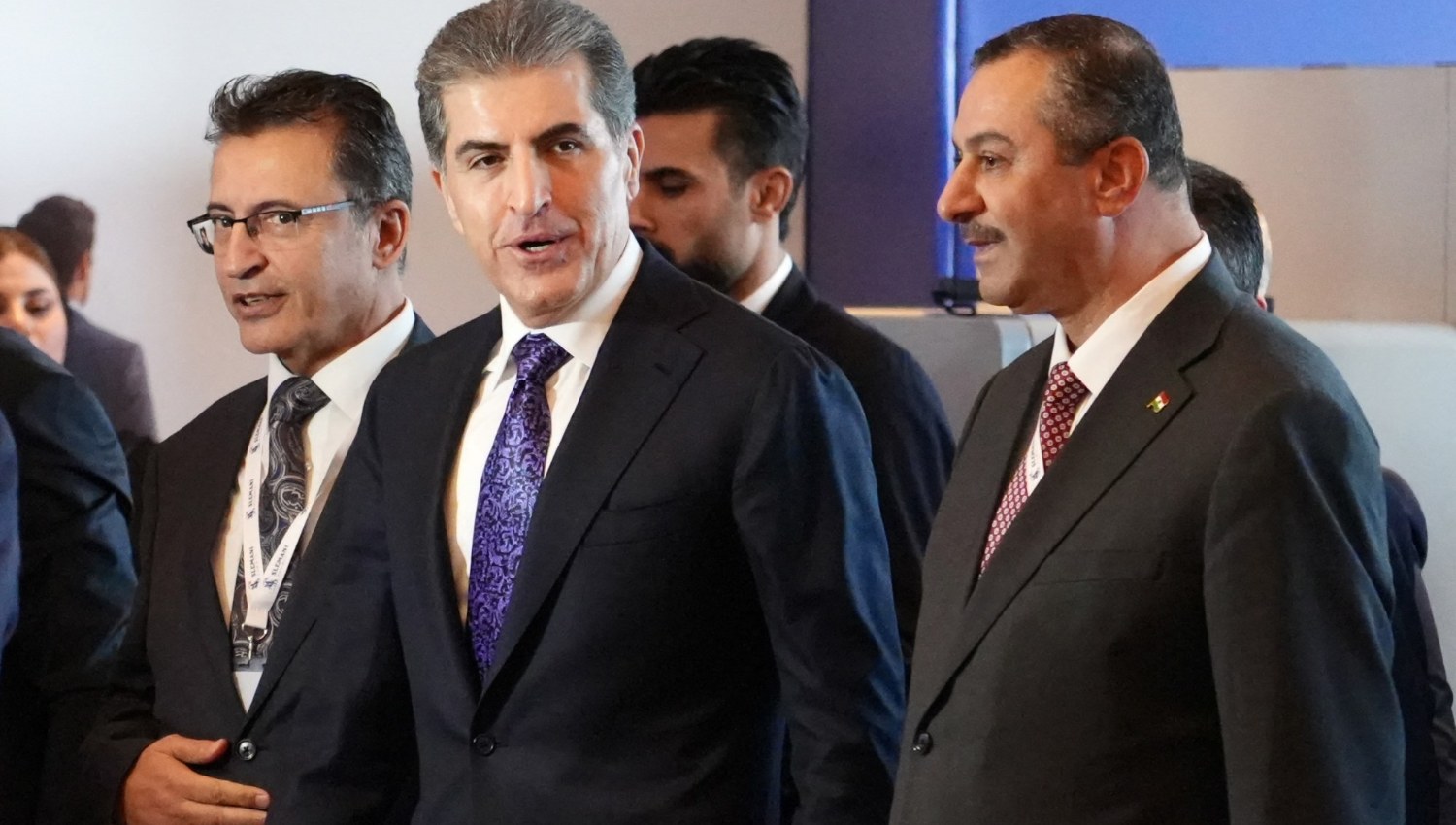

Nechirvan Barzani, president of Iraq’s Kurdistan region, said on Monday that Iraq must not pose a threat to Gulf states and that weapons in the country should be held only by the government. He was speaking at the annual Middle East Research Institute Forum in Erbil.
Barzani tied the point to sovereignty. “Iraq should not be a threat to Gulf countries,” he said, adding that Iraq needed to build its own capacity to take responsibility for its security. His comments come as Baghdad faces pressure to bring armed factions under state control following attacks by Iran-aligned groups on targets inside Iraq and across the region. He endorsed a call by Prime Minister Ali Al Zaidi, who said on 1 October that serious work had begun on dealing with weapons outside state control.
That date marked what the government called full Iraqi sovereignty, after the US-led coalition against ISIS completed its military withdrawal on 30 September. Security cooperation between Baghdad and Washington is now moving to a bilateral framework. Barzani said Iraq no longer needed a large international coalition after 12 years and should instead build security ties with individual partner countries. He thanked the coalition, but said the Kurdistan region still needs air defence systems after repeated drone and missile attacks.
On the wider region, Barzani said the changes under way bring both opportunities and threats for Kurds, and that he believed the opportunities could be greater. He described economic uncertainty, and in particular Iraq’s dependence on oil exports, as the country’s biggest risk. He warned that an unresolved situation in the Strait of Hormuz would become a long-term challenge. Iran has effectively blockaded the strait since the war began.
Barzani also criticised Iranian Kurdish opposition groups, saying their conduct during the war had put the Kurdistan region in a difficult position. “It was not our war,” he said. In early March, reports said some of those fighters were preparing to cross into Iran, which the groups denied and Iraqi Kurdish officials rejected. The region shares a border of more than 600km with Iran. Its government closed that border early in the conflict, deployed forces along it, and has said it will not allow its territory to be used for any attack on its neighbour.